

A new arts-based research project reveals how young people in Ambon, Indonesia are transforming language into a tool for unity and healing.
Associate Professor of Anthropology, Dr. Elizabeth Drexler, co-authored a new study titled Language and Conflict De-escalation: Preserving peace in Ambon through literature and art. In collaboration with Dr. Wening Udasmoro, Professor of Literature and Gender and Vice Rector of Education and Learning at Universitas Gadjah Mada, and Mariana Lewier, lecturer at Pattimura University in Maluku, the team examined how the youth of Ambon approach social issues related to peace, justice and human rights.
Despite its now vibrant cultural identity, the region has also experienced religious conflict, particularly following the end of Indonesia’s authoritarian rule in 1998. While previously communities had lived together peacefully for decades, tensions escalated in the early 2000s.
According to the study, language—including rumors and misinformation—was used to fuel conflict. Indonesia has reported numerous cases in which online agitation has led to direct physical violence toward youth.
Through conversations with members of the current youth arts community, the researchers identified ways in which musicians, artists and writers were approaching this conflict differently than previous generations.
To promote de-escalation, Drexler explained that in the early 2000s the Ambon youth began countering disinformation and emphasizing local context. Their approach stood in contrast to outside media, which often lacked context and presented issues in a polarized way.
“Language is often seen as a force that incites violence,” Drexler said. “We saw an opportunity to highlight how these youth had used a force (language) often used for violence, to promote peace.”
Today’s Indonesian youth take de-escalation a step further. They create art and music together in mixed communities, including with groups their communities were once in conflict with. Rather than use language exclusive to their own communities, they focus on building trust and demonstrating that peaceful collaboration is possible.


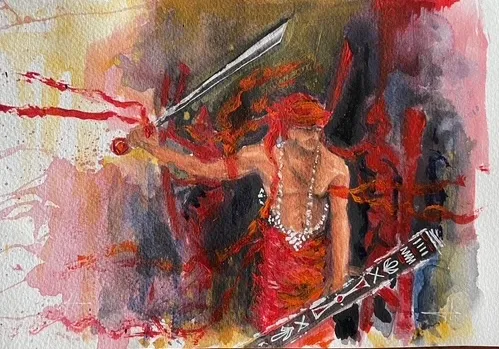
Watercolor paintings by: Helmi Ishak Johannes (Instagram: @miidraw)
Ambon, Drexler explained, is an example of a city that used the arts to bring communities together and provided youth with economic and social opportunities. By focusing on the arts, young people have been able to create new identities and livelihoods that do not focus on past conflicts.
“They made decisions to intervene in these cycles and use language and art communities in ways that would counter practices of fear, othering and polarization which allowed them to also build successful livelihoods,” Drexler said.
By Louise Henderson