
-

MSU doctoral student spends summer supporting identification work at the DPAA
A summer on Offutt Air Force Base: how one doctoral student joined the effort to bring service members home
-

MSU Anthropology team assists Lansing police with investigation of human remains
Lansing police brought in an MSU Anthropology team to assist after human remains believed to be several years old were found in Lansing on Saturday, according to WLNS. The Medical Examiner’s Office is working to identify the remains, and the investigation is ongoing. Dr. Joe Hefner, associate professor of anthropology and a board-certified forensic anthropologist, said formal analysis had not begun when WLNS 6 News spoke with him Monday. He described in general terms what skeletal remains can offer investigators. “We can look at the bones and determine the age, sex, stature and at times population affinity,” Hefner said. “We…
-
MSU research finds collection bias does not mask human skeletal variation
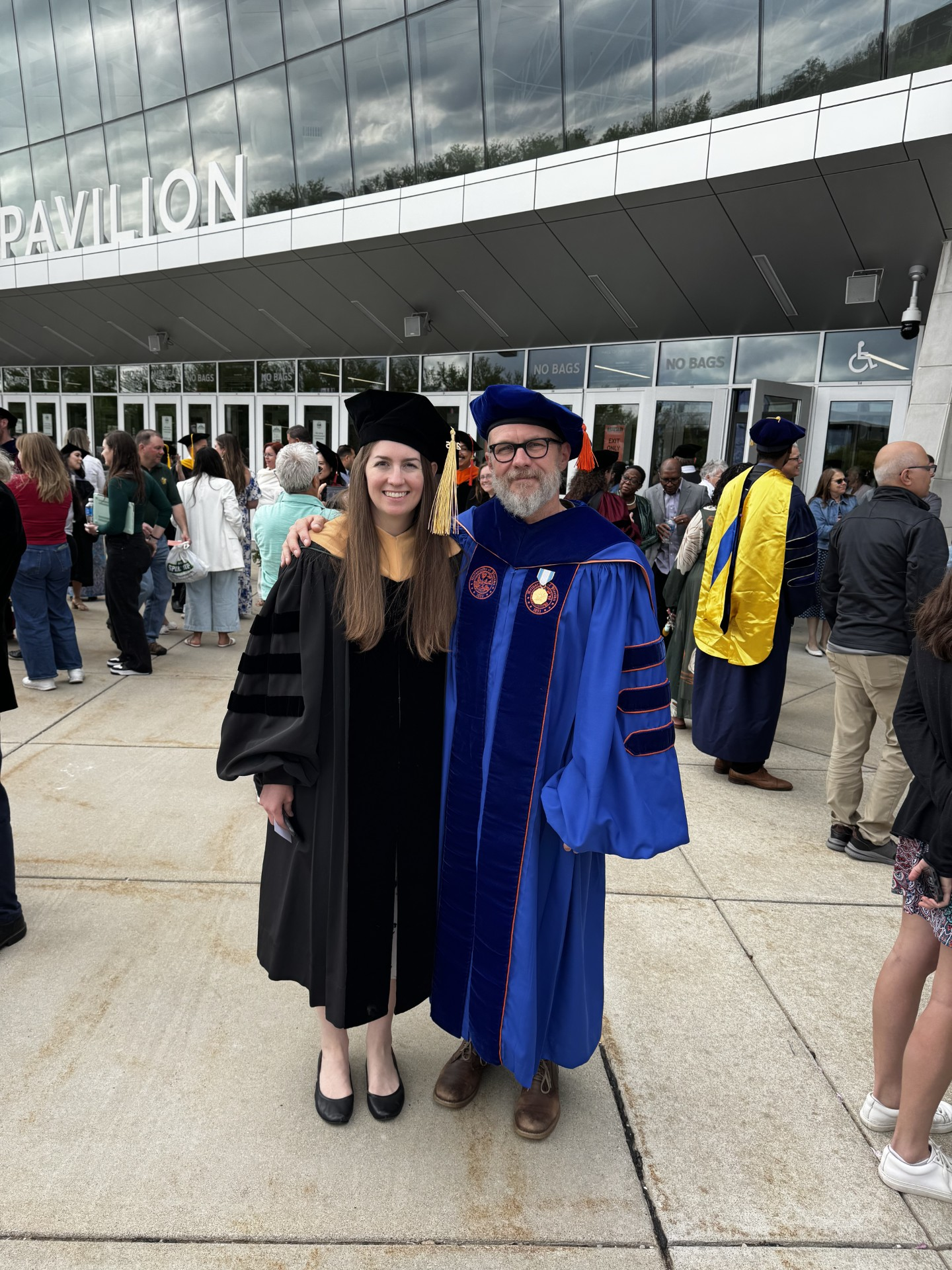
Forensic anthropologists build and test their methods using documented skeletal collections: curated sets of human remains where the donor’s age, sex, ancestry and other identifying information are known. But those collections have never been random samples of the population. Historically, they drew from unclaimed bodies, which skewed toward poorer and marginalized communities. Today, most come from voluntary body donation programs, which skew in the opposite direction: older white men donate at the highest rates. The question for the field has been whether that built-in bias distorts the science built on top of it. A new study by Dr. Rhian Dunn…
-

MSU anthropology senior Megan Berry finds big questions in archaeology’s smallest fragments
A summer sorting microscopic fragments led anthropology senior Megan Berry to an unexpected interest
-
Rethinking “contact”: what Michigan’s earliest trade goods actually show
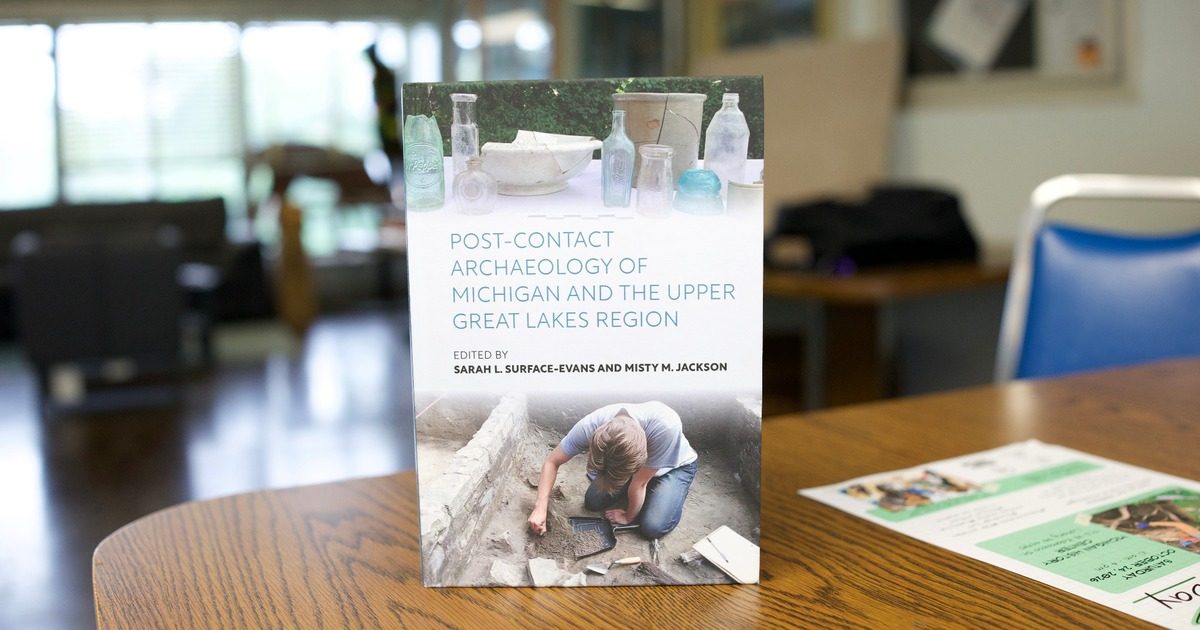
At an inland site in Marquette County, archaeologists have recovered iron scissors, lead shot, kettle fragments, glass beads and a small assemblage of iconographic rings. Radiocarbon dates from charred material and moose bone there average to the 1630s. It is some of the earliest evidence for European-manufactured goods in Michigan. How those objects got there is not settled. They may have arrived ahead of the Europeans who made them, moving inland along Indigenous exchange networks that were already carrying goods deep into the continent. Dr. Jessica L. Yann writes that ideas about the European newcomers would have circulated along the…
-

Challenging the sacrifice narrative in Maya cave research
When human remains turn up in the caves of central Belize, the default interpretation has often been the same: sacrifice. Dr. Gabriel Wrobel, professor of anthropology at Michigan State University, has spent two decades testing that assumption, and the evidence keeps pointing somewhere more complicated. In a recent guest presentation for Aztlander, Dr. Wrobel makes a broader case before he gets to the caves: that archaeological interpretation too often outpaces the evidence supporting it, and that sensational readings tend to get rewarded with attention. He opens with a well-known cannibalism controversy from the American Southwest, where a widely covered theory…
-

GLIS/Anthropology alum receives prestigious Fulbright award
The Fulbright Program has selected seven Michigan State University students as finalists for the 2026–27 academic year, including recent Global and International Studies (GLIS) and Anthropology alum Catelyn Arnold. Arnold graduated in 2026 with both degrees, along with a minor in Korean. During her time at MSU, she studied abroad in South Korea, interned at the local Refugee Development Center, and became passionate about language education, education justice, and cross-cultural exchange. Her Fulbright English Teaching Assistantship will take place in Korea, an interest that began with language study and grew significantly during her junior-year semester abroad. “Living there gave me…
-

Professor Emeritus Lovis receives the 2026 Lifetime Achievement Award from the Michigan Historic Preservation Network
Professor and Curator Emeritus Dr. William A Lovis is the 2026 recipient of a Michigan Historic Preservation Network (MHPN) Lifetime Achievement Award “presented to outstanding and deserving individuals who through personal effort and/or involvement in historic preservation have made a significant contribution to the preservation of Michigan’s heritage”. The award recognizes Professor Lovis’ many contributions to the foundational underpinnings of archaeological heritage management and preservation at the national and state levels. Lovis has chaired the Michigan Historic Preservation Advisory Committee, held government affairs offices with the Society for American Archaeology (SAA), Society of Professional Archaeologists and Register of Professional Archaeologists,…
-

Access Champion: Dr. Stacey Camp
by Emily Jodway Throughout the month of May, we celebrate Asian Pacific Islander Desi American/Asian (APIDA/A) Heritage Month and highlight the important role that the members of this community have played in our shared history. We also spotlight members of the MSU community who strive to uplift these individuals and advance belonging through research and advocacy. Our May Access Champion is Stacey Camp, Associate Professor of Archaeology, Director of the MSU Campus Archeology Program and MSU Museum Curator of Archaeology. She came to Michigan State in 2017 after following the work of the late Lynne Goldstein for several years and…
-

Anthropology PhD candidate awarded the College of Social Science Graduate Student Research Award
By Jalen Smith Priyanka Jayakodi, a fifth year PhD candidate in cultural anthropology specializing in medical and environmental anthropology, has been named the recipient of the 2026 College of Social Science Graduate Student Research Award. This award is given each year to an outstanding graduate student in the college whose research exemplifies innovative and transformative achievement in their field of study. Priyanka’s research focuses on ecological bodily health, chronic illness, water, gender, state violence, and visual ethnography. She has presented her work at several international conferences, including the Society for Applied Anthropology Annual Meeting, the International Congress of Qualitative Inquiry,…