
Forensic anthropologists build and test their methods using documented skeletal collections: curated sets of human remains where the donor’s age, sex, ancestry and other identifying information are known. But those collections have never been random samples of the population. Historically, they drew from unclaimed bodies, which skewed toward poorer and marginalized communities. Today, most come from voluntary body donation programs, which skew in the opposite direction: older white men donate at the highest rates.
The question for the field has been whether that built-in bias distorts the science built on top of it.
A new study by Dr. Rhian Dunn and Dr. Joe Hefner, published September 14 in the journal Humans, offers an answer: it does not. Collection-specific bias exists and has a measurable effect on aggregate cranial measurements, but it is not strong enough to mask the real biological differences between populations and sexes that forensic methods rely on.
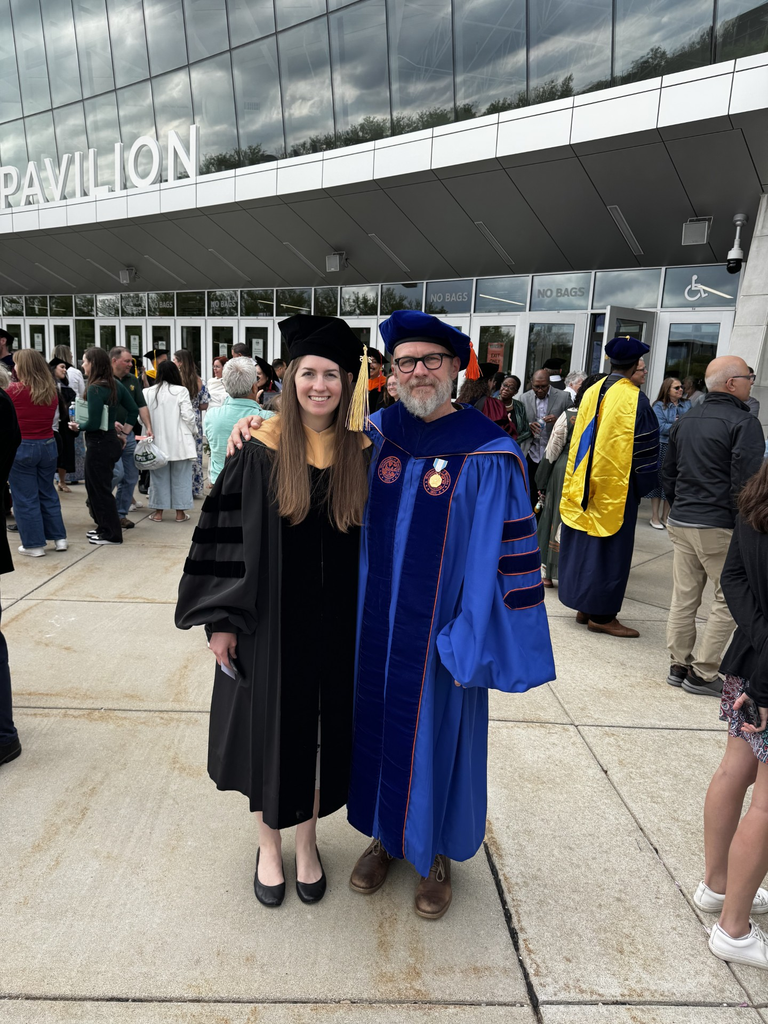
To test this, Dunn, who completed her doctorate at Michigan State University under Hefner’s supervision, collected craniometric data from 1,161 individuals across eight documented skeletal collections around the United States. She took 78 cranial measurements per individual using a digital measuring tool called a MicroScribe digitizer, and she did all 1,161 herself to eliminate the variable of different observers measuring slightly differently.
When the data were analyzed, individuals consistently grouped with others of the same population and sex rather than with others from the same collection. In other words, the biological signal came through clearly despite the sampling bias underneath it.
“This finding means researchers can still rely on documented skeletal collections to create and validate skeletal analytical methods, but they need to understand who is represented in a particular collection and how that collection was formed prior to sampling from it,” Dunn said.
One collection stood out. The Maxwell Museum at the University of New Mexico deviated from the pattern of the other seven, and for Dunn, that was the most unexpected finding.
“This raises questions about population histories in the American Southwest and has inspired us to pursue future research to better understand the cranial variation represented in that region,” Dunn said.
The research was partially funded by a National Institute of Justice Graduate Research Fellowship and by a Corey Endowment Award and a Research Scholars Award from MSU’s College of Social Science.
Dunn is now an assistant professor in the Department of Anthropology and Sociology at Western Carolina University. Hefner is an associate professor of anthropology at MSU and the principal investigator of MOSAIC, a $2.1 million NIJ-funded project to build the first computer program that produces a holistic biological profile from skeletal remains.
The full article is publicly available at https://doi.org/10.3390/humans6030034.