Department of Anthropology Associate Professor Gabriel D. Wrobel recently published in a new article in The Conversation in which he discusses how how trophies made from human skulls hint at regional conflict around the time of the Classic Maya civilizations collapse.
Najib Hourani, Assistant Professor in both Anthropology and Global Urban Studies, received a Fulbright Fellowship and a Council of American Overseas Research Centers Senior Scholar Fellowship for his new research project working with Syrian refugees in Jordan. His project seeks to understand their needs and aspirations for the reconstruction of their neighborhoods, towns, and cities. The project, entitled Toward a Positive Peace?: Urban Reconstruction in Syria, will have him conducting research in Jordan from August 2019-August 2020, with funded follow up work the summer of 2021.
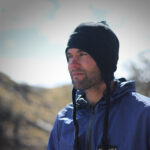
Dr. Kurt Rademaker started with MSU Anthropology in Fall of
2018. His research focuses on human biogeographic expansion into the Andes
mountains and adds to our understanding of the timing and routes of initial
human settlement of the Americas and the role of ecological variability in
driving human adaptations and in understanding the relationships between humans
and their environments. Learning about the human past is essential for
understanding the history and evolution of the environments we inhabit.
Dr. Rademaker’s current projects include excavations of
archaeological sites from the Pacific Coast to the high Andes, as well as
surveys in remote, unexplored areas to discover new sites. Archaeological sites
indicate that people were connected over large areas, his research seeks to
understand when and how those connections formed, how they functioned and were
sustained over time. His work collaborates with physical anthropologists,
paleogeneticists and earth scientists to study what past environments were like
and how these have changed over time. It is thrilling to think about the first
groups of people moving into new and uninhabited continents.
Kurt’s team has discovered that ice age environments in the
Andes were not as hostile as people used to think and that early Americans could
settle these high mountain environments at the end of the last ice age. His
work has been featured in popular media outlets such as National Geographic,
the BBC, the Wall Street Journal, the New York Times, the Smithsonian, Sapiens,
and many others. He feels it is important to share these discoveries with the
global public. His work examines long-term Andean environmental change and its impact
on past humans. He hopes what he learns will prove useful for current and
future Andean people as they cope with climatic change.
Rademaker’s Team at Cuncaicha Rockshelter
Currently, Dr. Rademaker is expanding beyond southern Peru
to build transects of archaeological sites and paleoenvironmental records along
the Andes. This work will allow them to explore variability in environmental
change and human adaptive patterns. He is excited to be a part of a strong
Anthropology department with excellent, supportive faculty and a vibrant
community of graduate and undergraduate students. One of his favorite things
about his work is that every day has the potential of discovering something new
that no one has ever learned before. This is true both in the field and the
lab.
Dr. Rademaker became interested in anthropology when he took
an intro class as an undergraduate student at the University of Kentucky. By
the time he took his second class, Introduction to Archaeology, he was hooked.
That initial interest just deepened with time, after a field school and working
in cultural resource management, leading him to pursue his PhD from the
University of Maine in 2012. Outside of his work, Kurt loves exploring the
outdoors with his wife Erica and their dog Cowboy and are glad to live in a
state with lots of nature and opportunities for canoeing, hiking, camping. In
the Andes and elsewhere he loves climbing high mountains and some of his other
hobbies include motorcycles and gardening.
Kurt has two new publications in preparation on the site formation of Cuncaicha rockshelter and the digital cranial reconstruction of a 9000-year-old Andean highlander referred to as the Lady of Cuncaicha. We welcome Dr. Rademaker and look forward to more exciting research. For more information about his work, check out his working group’s website: www.paleoandes.com
The Department of Anthropology is pleased to announce that Assistant Professor Ethan Watrall is part of a team recently awarded a European Cooperation of Science & Technology grant for the Saving European Archaeology from the Digital Dark Age (SEADDA) Project. The project is based on the premise that making archaeological data open and freely accessible is a priority across Europe because the digital realm lacks appropriate, persistent repositories. The result is that, due to the fragility of digital data and non-repeatable nature of most archaeological research, we are poised to lose a generation of research to a “digital dark age.” Mitigating this crisis will bring archaeologists and data management specialists together to share expertise and create resources allowing them to address problems in the most appropriate way within their own countries. While important international standards exist, there is no single way to build a repository. To be successful, archaeologists must be at the decision-making heart of how their data is archived to ensure re-use is possible.
The SEADDA Project, based at the University of York (UK) and
made up of scholars from 26 countries, will address these challenges by establishing
a priority research area in the archiving, dissemination, and open access
re-use of archaeological data. It brings together an interdisciplinary network
of archaeologists and computer scientists; experts in archaeological data
management and open data dissemination and re-use. The project will create
publications and materials, setting state of the art standards for
archaeological archiving across Europe. The project will also organize meetings
and training, allowing archaeologists from countries with archiving expertise
to work with archaeologists with few or no available options, so they may share
knowledge and create dialogue within their countries and move forward to
address the crisis.
Dr. Bill Lovis and Dr. Allison Davis, U.S. Department of State, celebrate Ñusta’s return to Bolvian soil
Dr. William Lovis, Professor Emeritus of anthropology, Curator
Emeritus of anthropology, editor of Midwest Archaeological Perspectives and research
affiliate for Lithic Microwear Research Laboratory completed the repatriation
to Bolivia of the 500-year old mummy of a young Andean girl. Her arrival at the
Washington, D.C., Embassy of the Plurinational State of Bolivia marked the
beginning of his retirement after a 45-year career at MSU.
The mummy, nicknamed Ñusta, a Quechua word for “Princess,”
had a long MSU history. MSU Museum records revealed she was donated to the MSU
Museum in 1890 by then U.S. Consul to Chile and MSU Board of Trustees member
Hon. William B. McCreery. She came from south of LaPaz, Bolivia, and was
originally placed in a stone tomb, along with a variety of accoutrements
including pouches, bags, a small clay jar, sandals, beads, feathers and several
types of plants including maize, beans, grasses, kapok and coca. The burial was
reputed to be “Pre Columbian” and “Inca,” so the maize from her pouch was
radiocarbon dated, which revealed it was as old as the second half of the 15th
century, indicating her burial likely predated Columbus’s arrival — and the
Spanish conquest of the Inca.
Museum documents also revealed that throughout the first
half of the 20th century she was prominently displayed in early iterations of
the MSU Museum, all over campus through the 1970s. As societal sentiments
toward the display of human remains in the U.S. changed, Lovis became part of a
group of museum curators who successfully recommended she be taken off display.
Bill initiated discussions with then acting MSU Museum director Lora Helou
about repatriating the mummy and her associated burial objects to Bolivia.
Helou agreed, catalyzing an effort starting in 2016 that took him through his
consulting year and into retirement.
Surmounting multiple national and institutional bureaucracies, MSU administrative changes, language differences, documentation protocols and working through ethical and legal issues presented an ongoing series of daunting challenges — only accomplished with the assistance of colleagues Jose Capriles, Allison Davis and David Trigo. As the repatriation efforts came to closure, Dr. Lovis attended the October 26, 2018 MSU Board of Trustees meeting, where they deaccessioned Ñusta and her funerary paraphernalia. Ñusta was no longer an MSU possession but officially become the property of Bolivia.
Arrangements were made for U.S. Art to package and transport
Ñusta to Washington D.C. and deliver her to the Bolivian Embassy on January 22,
2019, where Lovis witnessed her arrival on Bolivian soil in the United States.
Her arrival coincided with the annual anniversary celebration of the Plurinational
State of Bolivia, which included a reception with the young lady in prominent
view, an indigenous Aymara ceremony, members of the Bolivian delegation,
including Deputy Charge d’Affairs Alejandro Bilbao La Vieja Ruiz and a group
from MSU — including Dr. Lovis. After 129 years, on the anniversary of the
Plurinational State of Bolivia, MSU’s “Bolivian mummy” has been repatriated to
her home nation and people. We thank Dr. Lovis for his tireless dedication to
the MSU community.
Greg Hare, the former Yukon Archaeologist and Senior
Projects Archaeologist with the Government of Yukon, Canada, recently retired
after 30 years of service, visited MSU from March 11-15th, 2019 as
the 3rd Annual Alumni and Friends of Archaeology Endowed Lecture
Series. While here, Dr. Hare gave a department talk entitled, “Global Warming
and Melting Ice Looking into the Past – Preparing for the Future” where he
discussed how increasing global temperatures have created both serious
challenges and unique opportunities for archaeology in the circumpolar north.
He also gave a public talk entitled, “The Yukon Ice Patch Project Ancient
Artifacts Melting from Alpine Ice.” This talk provided an overview of the Yukon
Ice Patch Project and explored the collaborative working relationship with
indigenous communities and implications for heritage management. His talk
reviewed the challenges posed by environmental change, the newly developing
field of glacial archaeology and possible implications for international
research agendas.
Dr. Hare is an editor of the Journal of Glacial Archaeology, Sheffield, U.K. and in 2012 he was program chair for Frozen Pasts – the 3rd International Glacial Archaeology Conference, in Whitehorse Yukon. He studied anthropology and archaeology at the University of Victoria and University of Alberta, Canada and lives in Whitehorse, Yukon, Canada.
Dr. Lynne Goldstein Receives Society for American Archaeology Lifetime Achievement Award
The Department of Anthropology is pleased to announce Dr. Lynne Goldstein (Professor Emerita of Anthropology and Founding Director of the Campus Archaeology Program) received the Society for American Archaeology Lifetime Achievement Award at the 84th Annual Meeting in Albuquerque New Mexico on April 12, 2019. This prestigious award is in recognition of her pivotal theoretical and empirical contributions to the field, in the areas of mortuary archaeology, Midwestern prehistory, historical archaeology, archaeological ethics and repatriation, public engagement, as well as professional and institutional leadership.
Lynne Goldstein earned her BA degree in Anthropology from
Beloit College in 1971 and her MA and PhD from Northwestern University (in 1973
and 1976, respectively). Her commitment to archaeology began even earlier, in
her high school days through volunteer work at the Field Museum of Natural
History and participation in the Kampsville Project. Over the course of her
career, she taught at both the University of Wisconsin-Milwaukee (1976-1996) and
Michigan State University (1996-2018) and chaired both departments. She retired
from MSU in August 2018 and now holds emerita status.
Over the 48-year period of her career (and more than 65
publications and 200 conference papers), she has made fundamental theoretical
and empirical contributions to archaeology. One of the hallmarks of Goldstein’s
career has been her intellectual curiosity and enthusiasm about taking on new
projects and exploring a range of different research questions. This curiosity,
when coupled with her advocacy for public engagement with archaeology and her
passion for communicating archaeological knowledge to diverse audiences, has
driven her involvement in an array of projects.
Her service to the SAA has been recognized by five Presidential Recognition Awards. Her service, both on the SAA Task Force on Repatriation and as an advisor, from 1990-2010 made important contributions to the form and implementation of NAGPRA legislation. She also served on the Smithsonian Repatriation Committee for many years. Lynne served as Secretary of the SAA (1988-1991), editor of American Antiquity (1996-2000), as co-Chair with Barbara Mills on the Task Force on Gender and Research Grants Submission (2013-2019), and currently chairs the SAA Publication Committee (2018-2021). She was similarly active in the American Anthropological Association, serving as Publication Director for the Archaeology Section (2013-2017), Liaison to the Register of Professional Archaeologists (2016-2018), and on additional committees. This does not even touch upon her leadership in the Midwest Archaeological Conference, Wisconsin Archaeological Survey, Florida Public Archaeology Network, American Association for the Advancement of Science, and other national and regional organizations. Dr. Goldstein has chaired 18 dissertation committees, served on dozens more, and mentored graduate (and undergraduate) students in programs around the US, in the United Kingdom, and beyond. We thank her for her service and look forward to keeping up with her retirement.
MSU Forensic Anthropology continues to bring answers and closure for the families of tragedies. When unidentified human remains were found on private property in northern Kent County, Wyoming Department of Public Safety called in MSU forensic anthropologist, Dr. Joe Hefner to identify the remains. They were the remains of Charles Oppenneer, a victim of the ‘Craigslist killer’. Dr. Hefner and the MSU forensic anthropology team determined the cause of death and positively ID’d the man, offering closure for the family of Mr. Oppenneer, who had been missing since 2014. Hefner and the MSU team also provided invaluable evidence for the police department. You can read the full story here. Our sympathies go out to Mr. Oppenneer’s family and friends.
Dr. Joe Hefner, Assistant Professor in the Department of Anthropology, was also quoted in a recent Washington Post article where he discussed the Easter terrorist bombing in Sri Lanka. Hefner, a board-certified forensic anthropologist who assisted in the aftermath of the 9/11 attacks, provided The Washington Post with his expert perspective on the incredible challenges in identifying victims in a disaster of this magnitude.
On February 14-15, 2019, the MSU’s Department of Anthropology, co-hosted an international and interdisciplinary conference entitled Cities of the Arab World: Theory, Investigation, Critique. In partnership with MSU’s Global Urban Studies Program (GUSP) and Muslim Studies Program (MSP), and the Center for Middle Eastern and North African Studies (CMENAS) at the University of Michigan, the event brought together scholars from the United States, Europe, and the Middle East to explore urban life in the geographic Arab world, and the political, economic, and cultural presence of Arab communities in cities around the globe.
Six panels were formed for the two-day conference, on topics
ranging from urban mega-projects and questions of sustainability, to the
political economy of post-conflict reconstruction. The program included two
very well received keynotes by Dr. Harvey Molotch (Professor Emeritus of Social
and Cultural Analysis and Sociology, New York University), and Dr. Mona Fawaz
(Faculty of Engineering and Design, American University of Beirut), and a
screening of El-Said’s In the Last Days
of the City (2016), in conjunction with the MSU Library Film Series,
organized by Anthropology and Area Studies Librarian Deborah Margolis.
The conference was designed with multiple goals in mind.
Among the most important was to explore not only cities of the geographical
Arab world, but to ask questions of its global extensions to urban communities
around the world. The second goal was to expand and deepen engagement between
Urban Studies and scholars of the Arab World.
“The major theoretical debates in Urban Studies continue to
be rooted in the US and European experiences. Theorizations from the South,
including the Arab world, are very exciting and intellectually productive, yet
they remain outside of the mainstream,” Hourani said. Given the large Arab and
Arab-American communities in Michigan, it is only natural that our public
universities would help to overcome this challenge.
“We were very pleased with the collaboration with CMENAS,
and the large turnout for the event demonstrates that there is a strong
constituency for the global orientation of research that GUSP, MSP and
Anthropology produce, both within the university and across the state.”
Miss Avdoulos in front of Cambridge’s famous Red Door after submitting her PhD dissertation.
Eve Avdoulos graduated from Michigan State University in 2012 with her degree in anthropology, going on to graduate from the University of Cambridge with a Master of Philosophy in 2013. In July of 2019, she will receive her Doctor of Philosophy from Cambridge where she was a researcher at the Centre for Urban Conflicts Research located within the Department of Architecture. Currently, she is applying to various postdoctoral and public sector positions.
Ms. Avdoulos’ PhD, submitted in September 2018, investigated the complexities and contradictions of the phenomenon of urban decline. Through the study of Detroit and a close reading of two residential urban neighborhoods, she examined the development of urban decline over time, as well as how this phenomenon has differentially affected social patterns and practices within the city. By highlighting a methodological approach focused on the everyday lived experience of the city, she illustrated how decline should be regarded as a process that actively transforms the urban environment by dismantling and disassembling existing spatial and social networks and infrastructures, while, creating new ones.
Eve is particularly interested in the socio-political and cultural aspects of urban environments and the ways built environments influence the human condition. At the root of her work is a desire to better understand the human condition to strengthen equity, inclusion, and diversity in our ever-growing urban areas. She enjoys teaching because it allows her an opportunity to engage students in critical thinking and discussion, to help students discover their passions and motivations and to instill the skills and confidence to pursue their personal and professional goals. She feels fortunate for her incredible teachers at MSU who taught her these things as well as instilling a love of fieldwork. Ms. Avdoulos believes fieldwork offers members of the community a chance to share their own stories and experiences in ways they were previously unable to do so.
Eve presents her research at Centre for Urban Conflicts Research at Cambridge
During her time at MSU, she was actively involved with the Department of Anthropology through volunteering in the archaeology lab, attending an archaeological field school in Greece as part of a study abroad program, working at the MSU Archives & Historical Collections and participating in the Campus Archaeology Field School. Each of these experiences provided her with the foundational skills needed to achieve success in graduate school and prepared her for a career in academia and research. Eve first got interested in anthropology through her fascination with ancient cultures and the material remains of their societies. Upon a family trip to Rome, Florence, and Pompeii, she became spellbound by the incredible feats of human ingenuity and knew upon being accepted to Michigan State that she wanted to pursue an Anthropology degree to further study her interest in the human condition.
Her current department, The Centre for Urban Conflicts Research within the Department of Architecture at the University of Cambridge is dedicated to investigating cities experiencing conflict, including those caused by ethnicity, nationalism, religion, class, or race. The Centre maintains an interdisciplinary and multi-disciplinary approach and is comprised of individuals from a variety of backgrounds including anthropology, architecture, geography, and history. The diversity of research undertaken by those working at the Centre exposed Eve to a wide range of global urban issues.