Maxwell Fortin, Photo by W. Lovis, used with permission
The Institute of Museum and Library Services Museums for America Program recently awarded $77, 292 of a total project budget of $151,296 to Co-PIs Dr. William Lovis and Lynne Swanson (Cultural Collections Manager at the MSU Museum) for a project titled “Michigan State University Museum Archaeological Collections Stewardship Project: Compact Storage Upgrades to Cultural Collections Resource Center.” This programmatic and infrastructure improvement grant is designed to provide improved storage conditions and enhance the available storage space for archaeological collections housed at the Collections Resource Center at Central Services building adjacent to Spartan Stadium. Compact storage technology, familiar to many through its use at libraries, can enhance space availability by an additional 1/3 to almost 50%, allowing proper curation of more collections in less space. The compact storage units have already been installed, and many collections are already being moved into the renovated storage facility.
In tandem with the infrastructural improvements that accrue from compact storage, many of the archaeological collections are being brought up to contemporary museum curation standards by rehousing them in appropriate acid and chloride-free materials. This work is being undertaken by undergraduate anthropology students, both those supported by the grant and volunteers seeking hands on experience in museum collections management.
Maxwell Fortin (above) is a senior Anthropology undergraduate working on the project. He has been involved with rehousing the archaeological collections into proper archival boxes and bags for storage, as well as aiding in supervising the student volunteers. Maxwell states “I began helping with this process my freshman year as a volunteer and it has been very rewarding to see the project come into fruition as I graduate from MSU.” An Anthropology Department-supported graduate assistant supervises the activities. It is hoped that by the end of Fall Semester 2014 that the majority of the rehousing will be completed, and that the collections will be in better and more accessible condition for use by researchers.
After graduation from City College of New York (B.S. 1951), Dr. Bernard Gallin began his graduate studies at Cornell University, majoring in anthropology and China studies. One year later, in 1952, he enrolled in a 10-week summer Chinese language program at Yale University, intending to return to Cornell. Because of the Korean War, however, he was drafted into the army for two years (1952-54). Given his Chinese language training, he was assigned to Tokyo, Japan, as a China research specialist. As a result, his commitment to a career in China studies and anthropology crystallized.
Soon after Dr. Gallin’s army discharge and return to graduate work at Cornell, he and his wife and research partner, Rita S. Gallin, (MSU Professor Emerita of Sociology), spent two years in Taiwan, where he did his Ph.D. dissertation field work. In the spring of 1959, they returned to Cornell, where he began writing his dissertation.
Like other graduate students at the time, he left the dissertation unfinished to teach at Wayne State University, followed by another year teaching at SUNY Binghamton. Finally, in Fall, 1962, he arrived at MSU’s Department of Sociology and Anthropology, which shortly thereafter became the Department of Anthropology. In the 12 years that followed Dr. Gallin’s arrival, he taught, served as the department’s chair, and made multiple trips to Taiwan to conduct research. Since retiring from the university in 2002 as Professor Emeritus of Anthropology, Dr. Gallin has continued his research on Taiwan. Based on his years of fieldwork, he has authored and co-authored numerous publications with Rita.
As the first Western anthropologist to do a Taiwanese village ethnography, his dissertation research focused on Taiwanese culture in a single village and that community’s relationships with other villages in the local area and with its urban migrants. With Taiwan’s industrialization, he continued research in the same village as well as with migrant families from the village living in Taipei and its suburbs. In the late 1990s he also followed villagers to several southeastern industrializing centers in Fujian Province on the China Mainland (People’s Republic of China or PRC). There they pursued temporary work and business opportunities and joined tours to sightsee and to participate in religious activities.
As an aspiring China specialist, why, in 1956, did Dr. Gallin opt to work in Taiwan rather than on the PRC Mainland where the Taiwanese people’s ancestors had originally emigrated? Between 1949 and the late 1970s, research on the China Mainland was impossible for almost all Westerners. The PRC refused to admit Western researchers, and the U.S. would not permit Americans to go to the PRC. Further, most American China-oriented-scholars were unwilling to work in Kuomintang-held Taiwan. They considered it a police-state controlled by the corrupt and dictatorial Chiang Kai-shek’s Chinese Nationalist government.
Dr. Gallin agreed with their sentiments but decided to go to Taiwan for China field research. In his view, Taiwan would be the closest he could get to Mainland China to conduct research. He believed that the socio-cultural life of Taiwan’s main population would likely approximate that of the southeastern Mainland area of Fujian Province, from which most of the ancestors of the Taiwanese population had migrated, beginning in the mid-1600s. In the years since his original field work, American China researchers flowed to Taiwan to carry on research.
During Dr. Gallin’s years of research, as with many anthropology field workers, he gradually became involved in the villagers’ lives. Before the end of his first year of field work, a serious village problem developed, in which he inadvertently became involved. For Dr. Gallin the situation raised issues regarding a researcher’s personal intervention, or even involvement, in field situations. In this situation, Dr. Gallin felt he had no choice, if he was to continue living in the village and carry on his work successfully. Luckily, his intervention had a very positive effect and he realized how much better off he was by becoming involved. That decision helped him over the next 50 years to continue research with residents in the village area and its migrants in Taiwan’s cities, as well as in the PRC. That initial instance of intervention made him understand the necessity for flexibility in field research. In the years that followed, his involvement brought him the villagers’ respect and confidence, attributes necessary for successful field work. In 2006 the County government made his wife and himself Honorary Citizens of Chang-hua County.
The Gallins’ research findings from their many years of Taiwan field research provided valuable analysis of Taiwanese society and cultural life as it is compared to that of both traditional and PRC Mainland China, especially now as the PRC rapidly develops a capitalist-like socio-economic system, although under continuing Communist political rule. His own findings have demonstrated that much of the socio-economic and cultural patterns of family, kinship, economics and religion, whether in Taiwan or in various related PRC Mainland areas, appear to be undergoing much of their developmental and socio-cultural change along similar lines.
Dr. Moniruzzaman, Photo by MSU’s Presidential Report, used with permission
Dr. Monir Moniruzzaman first became interested in Anthropology during his undergraduate studies in Bangladesh at Jahangirnagar University. He finished his undergraduate with a Bachelor’s Degree in Anthropology and stayed another year at the university to complete a Masters in Anthropology. He then taught Anthropology at Shahjalal University of Science and Technology for three years. In 2000, he left for Canada to continue his graduate education. He received his Master of Arts from University of Western Ontario in 2003 and his PhD from University of Toronto in 2010.
It was during his studies in Canada that Dr. Moniruzzaman developed his current research interests on human organ trafficking in Bangladesh. For his Masters he examined how organ transplant raises serious ethical questions, as spare body parts become commoditized through new technology. His PhD was focused on exploring the underworld of kidney trafficking from living donors in Bangladesh. Due to the fact that the entire process and trade is illegal, fieldwork was extremely difficult. The act of selling organs is also socially stigmatized, making it more difficult to locate the sellers and talk to them about their experiences. Dr. Moniruzzaman learned to navigate these difficulties, but it was a highly challenging and risky process.
Dr. Moniruzzaman’s PhD research revealed the processes and experiences of kidney sellers in Bangladesh. He concluded that organ trafficking is utterly unethical: organ extraction is a form of violence and exploitation of the poor, imposing a terrible cost of harm and suffering. His research offers insight into bioethics and broadens debates on human rights, by examining the exploitation of the poor population,violence against their bodies, and suffering of their embodied selves, all of which generate a novel form of bodily inequality. His last fieldwork was in 2013, consisting of interviews with a liver seller (who sold part of his liver), his recipient, liver specialists and organ brokers to examine the emerging liver trafficking in Bangladesh and beyond.
Dr. Moniruzzaman’s work has been shared and published in a wide variety of formats and was even transformed into a successful art installation piece. He has been published in Medical Anthropology Quarterly, Journal of Social Studies, and several edited volumes. He has given testimonial on global organ trafficking to the US Congressional Human Rights Commission and the US Senate Committee on Foreign Relations. BBC, the Atlantic, ABC, NPR WKAR, and Discover Magazine have also featured his work and interviewed him. In 2012, MSU’s President Simon highlighted Dr. Moniruzzaman’s work as part of her annual report of the university, an honor for himself and the Department.
Dr. Moniruzzaman is planning to return to the field to continue his research on illegal organ trafficking. Currently, he is writing an article on liver organ trafficking in Bangladesh. He wants to continue examining broader bioethical questions based on the deeply moving narratives of organ sellers themselves.
Spring commencement preparations always remind me of how terrific our students are, and what wonderful opportunities our faculty provides for both undergraduate and graduate training. Throughout this newsletter you’ll see examples of undergraduates involved in various faculty-mentored research projects funded by the Provost Undergraduate Research Initiative and the department, volunteer experiences, field schools, peer mentorship, and Anthropology Club field trips and other events.
Watch your email for a special invitation to alumni to connect with our undergraduates. We are planning a fall reception to bring together alums working outside of the academy with undergraduate majors to help students envision the wide variety of directions that their bachelor’s degree may take them.
I am also very happy to note that we recently hired two new faculty members: a Socio-cultural Anthropologist hired as part of MSU’s Water Initiative, and a Forensic Anthropologist. These exciting additions to the faculty will be introduced in the Fall 2014 Newsletter.
During the 2014/2015 Academic Year I will be away in order to intensively focus on my research and Dr. Laurie Medina will guide the department as Acting Chair. Please feel free to contact Dr. Medina or Katy Meyers with your news updates.
Anthropology majors Kelsey Carpenter, Mari Isa, and Kyla Cools recently received honors for their research presentations at the annual MSU University Undergraduate Research and Arts Forum (UURAF), held at the MSU Student Union on April 4, 2014. Kelsey, Mari, and Kyla received First Place Awards in their respective sections within the Social Sciences division. Approximately 660 students presented at this year’s forum.
Kelsey’s presentation, entitled Cranial Fracture Patterns in Pediatric Deaths: Homicides and Accidents (abstract on page 134) focused on differentiating between inflicted and accidental injuries in cases of infant deaths involving head trauma. Mari’s presentation, Fracture Initiation and Propagation in Pediatric Blunt Cranial Trauma (abstract on page 145), focused on the interpretation of cranial fractures in cases of suspected child abuse. Dr. Todd Fenton advised both Kelsey and Mari as they completed their projects in the MSU Forensic Anthropology Laboratory.
Kyla’s presentation, entitled Ceramics at the Aztalan Site: Results of the 2013 MSU Excavations (abstract on page 143), compared ceramics found during the 2013 field season to collections previously excavated at Aztalan. Dr. Lynne Goldstein, director of the MSU Archaeology Field School at Aztalan, advised Kyla on her project.
The 6th Annual Council of Graduate Students Graduate Academic Conference occurred on March 27th, 2014 at the Kellogg Center. The conference had over 150 graduate and professional students presenting at this year’s conference. Each presented in a format that conveyed complex disciplinary material to an educated but non-specialist audience, an important skill that should be developed and practiced. This year, presenters had the option of communicating their work through three different formats: ten-minute traditional presentations, poster presentations, or in the three-minute competition, an exciting new presentation format.
This year, we had a record number of Anthropology graduate students participating and a winning presentation! Kelly Colas and Caitlin Vogelsberg both acted as judges for conferences sessions. Katy Meyers and Nicole Geske were on the conference committee, with Meyers acting as chair of the committee and primary conference organizer.
Presentations from Anthropology included:
Emily Niespodziewanski and Joseph T. Hefner: Determining ancestry from morphoscopic traits of the skull: inclusion of an Asian population
Emily was awarded second place for her 10-minute presentation
RoseAnna Downing-Vicklund:Trust Relationships and Drinking Water: Drinking Water Choices in Walkerton, Ontario
Nicole Geske: A Reconsideration of Oneota Mortuary Practices
Edward Glayzer: The Effects of the Commodification of Intimacy on Gender Inequality in South Korean Dating and Marriage Rituals
Meenakshi Narayan: Stereotyping the Chenchu: Constructing the Tribal Identity of a ?Vulnerable? Community in India
Nikki Silva and Katy Meyers: When Bones Are Lost Can Gender Be Found? A Spatial Examination of Gender in an Anglo-Saxon Cemetery
We are very pleased to announce that an article by Dr Chantal Tetreault, Assistant Professor of Anthropology, has been published in Language and Culture (vol 33). Entitled “Cultural Citizenship in France and le Bled among Teens of Pan-southern Immigrant Heritage,” the article addresses discourse among French teenagers of pan-immigrant, peripheral, and specifically southern descent that evokes the widely circulating spatial concept called le bled, a French word of Arabic origin. Drawing upon theories of cultural citizenship, the paper explores the connections that teens broker through le bled in two, divergent discourses that link French citizenship with modernity and race. The first discourse is one that conceptualizes le bled as less modern than France, which is ultimately a racially exclusive model of French citizenship because it typically treats le bled as a racialized and inferior place. The second discourse involves the conceptualization of France as a modern and racially inclusive place, seeking to assimilate people from various places (even though in reality, many of these policies that claim inclusiveness are exclusive).
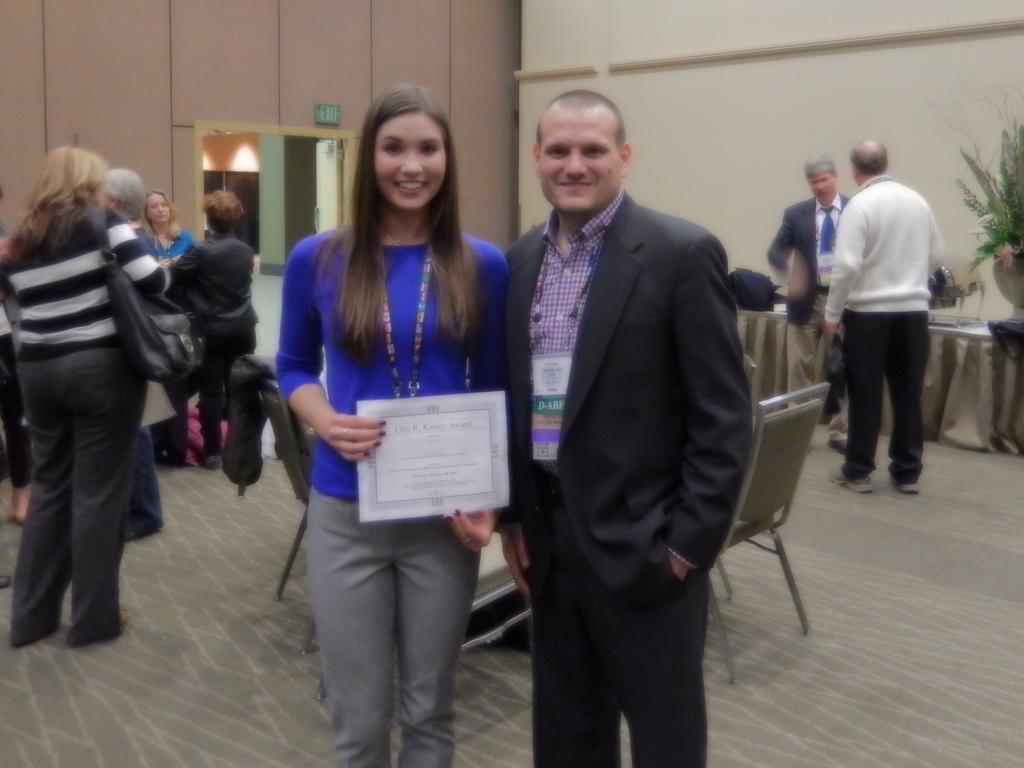
At the 66th Annual Meeting of the American Academy of Forensic Sciences in Seattle in February 2014, the Ellis R. Kerley Foundation announced MSU anthropology major Mariyam (Mari) Isa as the youngest ever winner of the Ellis R. Kerley award.
The Kerley Award recognizes “the paper or poster which best demonstrates originality, creativity, depth of research, innovation, new methodologies, research design, significance to the field, and/or potential impact on the practices of forensic anthropology.”
Mari’s paper, titled “Fracture Initiation and Propagation in Pediatric Blunt Cranial Trauma” focused on the importance of the accurate interpretation of skull fractures, especially in cases of suspected child abuse (abstract on page 418). The paper was a multidisciplinary effort involving the MSU Forensic Anthropology Laboratory, Sparrow Hospital Pathology, MSU Orthopaedic Biomechanics Laboratories, and the Harris County Institute of Forensic Sciences. The work was supported by a grant from the National Institute of Justice.
Citation: Isa MI, Fenton TW, Vollner JM, Niespodziewanski E, Love JC, deJong JL, DeLand TS, Haut RC. 2014. Fracture Initiation and Propagation in Pediatric Blunt Cranial Trauma. In: Proceedings of the American Academy of Forensic Sciences. Seattle. p 418.
Mari Isa (left) with Dr. Christian Crowder of the Office of the Armed Forces Medical Examiner (right), a board member of the Ellis R. Kerley Foundation.
The Department of Anthropology is very happy to announce the winners of the 2014 Fieldwork Photo Contest. The Fieldwork Photo Contest is intended to spread the message about the department and anthropology in general through the fieldwork photographs of faculty, students, and alumni.
This year’s Fieldwork Photo Contest is particularly exciting because all of the winners are either students or alumni – a real testament to how active and engaged our students are.
The winner’s photographs are posted on the department website, distributed over department social media, and displayed in the main department offices (in Baker Hall)
And without further ado, the winners:
1st Place – Peeping Monk (Eddie Glayzer, PhD Student)
Photograph taken in Ganjia, Ganus Province, China – April 2011
2nd Place – Proud Mother (Brian Geyer, PhD Student)
Photograph taken in Maasai Mara, Kenya – 2010
3rd Place – Life After Excavation (Eve Avdoulos, alumna)
Photograph taken in Olympia, Greece – 2010
Honorable Mention – Boats in Cambridge (Katy Meyers, PhD Student)
Photograph taken in Cambridge, UK, 2013
Honorable Mention – A Nepalese School Bus (Eddie Glayzer, PhD Student)
The Department of Anthropology is very happy to announce that the native Android version of Talus is now available for free from the Google Play Store. Created originally as a mobile website by Emily Niespodziewanski (PhD student in the MSU Department of Anthropology) as part of her Cultural Heritage Informatics Grad Fellowship, Talus aggregates dozens of the most commonly used bioprofiling methodologies into one easy-to-navigate mobile application. The app is designed to help forensic anthropologists, bioarchaeologists, and paleoanthropologists analyze human skeletal material without having to rely upon dozens of physical articles and books.
All materials used in Talus are clearly and simply cited so that users know exactly which bioprofiling source they are using. Ultimately, Talus is a user friendly reorganization and new presentation of trusted material, not the creation of untested information or methods.
The release of Talus for Android signals the next phase of the project. There are plans to release the app on iOS in the near future, and Emily is committed to adding new features and content to both the mobile web version and native mobile version.
About the Cultural Heritage Informatics Initiaitive
Hosted by the Department of Anthropology in partnership MATRIX: The Center for Digital Humanities & Social Sciences, the Cultural Heritage Informatics Initiative is a platform for interdisciplinary scholarly collaboration and communication in the domain of Cultural Heritage Informatics at Michigan State University. In addition, the initiative strives to equip students (both graduate and undergraduate in the many cultural heritage focused disciplines at MSU with the methodological skills necessary creatively and thoughtfully apply information, communication, and computing technology to cultural heritage materials, influence the current state of digital cultural heritage, and become thought leaders for the future of digital cultural heritage.