• Grad Student Jessica Ott Receives Fulbright-Hays DDRA

    Grad Student Jessica Ott Receives Fulbright-Hays DDRA

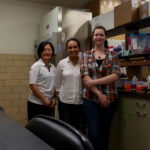
    Jess and Fatma

    Jessica Ott has been selected to receive a Fulbright-Hays DDRA for her research on women’s rights activism in Zanzibar. She is pictured here with a prominent activist, Fatma Alloo, in Zanzibar. Below is her project summary. Congratulations, Jessica!

    “Health rights for women’s rights: How Zanzibari feminist activists invoke the past to change the future for women”

    My dissertation will examine how feminist activists in Zanzibar invoke historical rights discourses and gendered ideas from the past about rights worthiness in their women’s rights advocacy. Existing anthropological studies of women’s rights have described contemporary feminist activism as guided primarily by “new” transnational women’s rights ideas. Through ethnographic and archival research, I will build upon existing anthropological understandings of transnational women’s rights by exploring how Zanzibari feminist activists additionally draw from Zanzibar’s long and rich history of engagement with women’s and human rights ideas in their contemporary political advocacy. My research will contribute to human rights policy debates an understanding of the implications of depending on historical rights arguments and constructions of innocent victimhood for women’s rights in Zanzibar.

  • New Books by Dr. William Lovis

    Lovis and Whallon MtL

    Edited by William A Lovis and Robert Whallon


    Springer 2016

    Uncertainty and Sensitivity Analysis in Archaeological Computational Modeling

    Edited by Marieka Brouwer BurgHans Peeters, and William A. Lovis


    This article appears in our Spring 2016 newsletter. Read the entire newsletter here.


  • Barbara Rose Johnston selected to deliver Michael Kearney Memorial Lecture

    Barbara Rose Johnston selected to deliver Michael Kearney Memorial Lecture

    Dr. Barbara Rose Johnston, Adjunct faculty member, was selected to deliver the Michael Kearney Memorial Lecture at the annual meeting of the Society for Applied Anthropology (SfAA) this past spring (2016). The SfAA honors the memory of Michael Kearney by selecting an outstanding contemporary scholar to present on a topic relevant to the three themes central in his work: migration, human rights, and transnationalism. Dr. Johnston delivered the distinguished lecture titled, “Climate Change, Migration, and Biocultural Diversity – Emerging Trends, D/volutionary Tipping Points?” Dr. Johnston was also recognized by the American Anthropological Association (AAA) at the annual meeting this past November as co-winner of the 2015 Anthropology in Public Policy Award (with Dr. Ted Hamann). Dr. Johnston’s AAA presentation was titled, “Doing environment, health & human rights work: “Familiar struggles to define & assert anthropological perspectives/ Strange occasions of ‘success’ in public policy.”  In it, Dr. Johnston discussed her work documenting human and environmental rights abuses and advocating for reparation and the right to remedy resulting from nuclear militarism in the Marshall Islands and World Bank funded hydrodevelopment in Guatemala. The AAA remarked about Dr. Johnston’s work:

    “Her study documenting the consequential damages of the Chixoy Dam helped inform a reparations negotiation process, encouraged US restrictions on World Bank and other IFI financing in Guatemala, and led to the historic adoption of a formal reparation mechanism that explicitly addresses the varied injuries and immense impoverishment resulting from internationally-financed hydroelectric dam development. Other recent work includes educating global leaders about the key role of water in sustaining biocultural diversity and the environment and human rights implications of nuclear militarism in the Marshall Islands, work that has helped shape and encouraged the implementation of internationally recognized United Nations policies.” (Read the full press release here.)

    2015 Public Policy award

    Dr. Johnston receiving the 2015 Public Policy Award. (Photo credit: Barbara Rylko-Bauer)

    Read more about Dr. Johnston’s work.

  • News From Around The Department

    20160205_124447The Department of Anthropology organized a visit to The Field Museum in Chicago this February to see “The Greeks: Agamemnon to Alexander.” The group of 36 participants included undergraduate and graduate students in Anthropology along with faculty from Anthropology and History and several History undergraduate students. (Photograph, far right: Students in the lobby of the Field Museum)

    Dr. William Lovis and alumnae Dr. Marieka Brouwer-Burg released their co-edited book, “Uncertainty and Sensitivity Analysis in Archaeological Computational Modeling.” (photograph, below left: Dr. Lovis and Dr. Brouwer-Burg with their volume. Co-edited with Hans Peeters, not pictured.)

    IMG_2475

    Dr. Jamal Hanifi (adjunct) presented his paper “The Introduction and Modernist Hegemonic Effect of European football in Afghanistan” to the Departments of Anthropology, History, and the Muslim Studies Program at MSU this April.

    Grad Student Nerli Paredes received an NSF Graduate Research Pre-doctoral Fellowship to support her next three years of graduate study. Her proposed research is titled: “Changes in breast milk composition with short and prolonged lactation, and its association with infant health indicators among Maya peoples.”

    Grad Student Katie Meyers Emery received the MSU Excellence-in-Teaching Citation Award for her accomplishments instructing students in multiple contexts. This past March she was also featured in Forbes magazine as one of 8 Anthropologists advancing public outreach in recognition of her notable blog, “Bones Don’t Lie.” Read more here.

    Grad Student Julie Fleischman won funding from the American Academy of Forensic Sciences’ Humanitarian and Human Rights Resource Center to oversee a new osteological project at Krang Ta Chan (a former Khmer Rouge mass gravesite in Takeo Province). The grant will allow the Cambodian team to purchase equipment and supplies to analyze and preserve thousands of human skeletal remains from the Cambodian genocide. Julie will serve in an advisory and fiscal role. Read more here.

    Grad Student Amy Michael was selected by her peers to recieve the 2016 GSA Peer Award in recognition of her contributions to the Department and Campus Archaeology, as well as her instrumental role coordinating the GSA’s water drive for Flint residents.

    20151107_173941Dr. Lynne Goldstein received the Midwest Archaeological Conference Distinguished Career Award this past November (photograph, far right). She was also selected by ANP graduate students to receive this year’s Jacob C. Climo Mentorship award for her ongoing support of graduate students.

    This past November Dr. Najib Hourani was invited to speak at the Harvard Arab Weekend on a panel entitled “Reconstruction and Identity” due to his expertise on issues of post-conflict reconstruction. Dr. Hourani also visited Beirut in March to deliver two lectures at the famed American University of Beirut, and is conducting follow up research toward his book project, “Glass Towers and Heritage Trails: Neoliberal Urbanism in Beirut and Amman.” Read more here.

    Dr. Barbara Rose Johnston (adjunct) received the Michael Kearney award at the 2016 Society for Applied Anthropology conference in April and delivered the Distinguished Lecture: “Climate Change, Migration, and Biocultural Diversity – Emerging Trends, D/volutionary Tipping Points?” Read more here.

    Grad Student Lisa Bright won the Society for California Archaeology Student Paper Competition in March for her paper titled “Differentiating Hospital Interred Individuals from the Larger Cemetery Population: The Curious Case of SCVMC’s Buttons.” She used the presence and absence of specific button types and patterns to classify the individuals interred. Read more here.

    Grad Student Emily Riley won GenCen’s 2015 Rita S. Gallin Award for Best Graduate Paper on Women and Gender in Global Perspective for her paper “The Politics of Téranga: Gender, Power, and the Political Equality Movement in Senegal.” The paper is an excerpt of her dissertation. (Photograph, below: Emily Riley, center, receiving her Award at the GenCen reception this past January)

    Annual Reception 2016 079


    This article appears in our Spring 2016 newsletter. Read the entire newsletter here.


  • Update from the Undergraduate Club

    This year, the Undergraduate Anthropology Club has been busy building personal and professional relationships, helping the community, and having a lot of fun along the way! We have had many professors speak to us about their research, bridging the gap between students and faculty. We are thankful for our supportive faculty, many of whom have joined us for our bi-weekly meetings. The club has also diversified its activities. During the fall semester, we were able to visit the Henry Ford Museum and get an exclusive look at some of the collections. We were able to hold a resume and CV workshop as well as have an informative documentary night. This semester we hosted an upperclassman panel during which seniors offered advice to and answered the questions of younger undergraduate students. We will have our annual paper competition and Professor of the Year contest as usual, and the winners will be announced at our last meeting of the year where we will continue the tradition having a student vs. faculty Jeopardy game.

    We are proud of the combined efforts of the UAC, HDSF, and the GSA to raise money and water donations for the city of Flint. Apart from what the GSA raised, we worked with UAC and HDFS and collected more than 30 cases of water, about 10 gallon jugs, and $275.00 to purchase water which we delivered to Flint. The UAC also has bi-weekly social events which offer club members the ability to mingle and make great friends within the department. Social events include coffee hours, study nights, potlucks, and more! We have also made our mark on the social media world with our new Public Relations e-board position. Using Facebook, Twitter, Instagram, our official website, and our new merchandise website we have expanded our reach in the department and beyond.

    –Taylor Flaherty, President (2015-2016)


    This article appears in our Spring 2016 newsletter. Read the entire newsletter here.
     

  • Update from the GSA

    12651174_1697605033841312_2121373207126023889_n

    The Graduate Students in Anthropology (GSA) is a student-run organization whose goal is to support and create community amongst graduate students in the department. This academic year we introduced the Academic Enhancement Scholarship to help students cover travel costs and academic necessities (i.e., books, software, hardware, etc.). The GSA awarded two $100 scholarships in Fall 2015 and two more in Spring 2016.  We also organized the first Graduate Research Symposium in January (see photo), which provided a platform for students from the various subfields to present and share their work with colleagues and hear about research conducted by faculty members. The symposium was well attended and we plan to make it an annual event.

    GSA also tries to facilitate camaraderie among graduate students. We held a “Festivus Party” for students in December with free food and a space for students to “air grievances” (i.e., complain about life). It was an effective stress-reducer and a lot of fun.

    We support these activities through fundraising. This fall we held our annual Chili Cookoff, which is both a fundraiser and a fun social gathering for faculty, staff, and students. We expanded the competition this year to include prizes for vegetarian chili and cornbread, and the result was delicious. Our spring fundraiser was a raffle and bake sale, with prizes that included a refurbished bicycle donated by one of our members.

    Having an impact beyond the department was also on our agenda this year. In collaboration with Ph.D. candidate Amy Michael, we organized a water drive for Flint. Grad students raised about $250 in addition to bottled water donations, and we delivered two carloads of water and school supplies to the Flint Boys and Girls Club.  Overall, this has been a great year for the GSA and we appreciate everyone who has been involved and all of the support from students and faculty.

    –Susan Kooiman, GSA President 2015-2016

    (Above, GSA symposium 2016. Below, Flint Boys and Girls Club receives GSA’s water donation.)

    12771834_1149922915027575_8010411021506783764_o


    This article appears in our Spring 2016 newsletter. Read the entire newsletter here.

  • Alumnus Dr. Robert Mainfort Retires in Lansing


    Bob_OSH 4-7-06
    Dr. Robert C. Mainfort, archaeologist and a triple alumnus of the MSU Department of Anthropology (BS 1970, MA 1974, PhD 1977), re-settled in Lansing in 2013 for retirement. MSU Anthropology was honored to bring him on as an adjunct professor, and he recently co-taught a graduate seminar, “Readings in Eastern North American Archaeology” with his long-time buddy from grad school, Dr. William Lovis.

    Dr. Mainfort’s most notable work focuses on prehistoric societies in the Midsouth. As Regional Archaeologist in Tennessee, he directed several years of research at Pinson Mounds, one of the largest mound groups in North America, dating to the Middle Woodland period. Some of the mounds had been relatively unstudied prior to his research and were quite large (one was 72 feet tall). His excavations there were the focus of many years of scholarship, and his recent book, Pinson Mounds: Middle Woodland Ceremonialism in the Midsouth (2013), was named an Outstanding Academic Title for 2014 by Choice Magazine.

    Dr. Mainfort spent many years working as Regional Archaeologist for the State of Tennessee before taking a position at the University of Arkansas, where he served as Director of Sponsored Research and Series Editor with the Arkansas Archaeological Survey, and taught and mentored grad students as a professor in the Department of Anthropology. One of his favorite projects in Arkansas, produced with the Old State House Museum in Little Rock, was an exhibit of prehistoric Native American artifacts from the turn of the 20th century. Dr. Mainfort curated the exhibit, playfully titled “Raiders of the Lost Arkansas” (2004-2007). The exhibit received an Award of Commendation from the Southeastern Museums Conference and was named Exhibit of the Year by the Arkansas Association of Museums. The exhibit was viewed by about 80,000 people and was also made available through an illustrated book.

    On another occasion, Dr. Mainfort’s efforts to bring archaeological and historical knowledge to the public stirred up local politics. Early in his career, he collected data to help reconstruct fortifications at the Civil War site of Ft. Pillow in West Tennessee. His research helped confirm that Ft. Pillow had been the site of a massacre of black Union troops by Confederate soldiers under General Nathan Bedford Forrest. Dr. Mainfort and a colleague, historian John Cimprich, combed through previously untapped materials from the National Archives to piece together what had occurred at the Fort. Their results were published as several articles, including one in The Journal of American History, in which they provided definitive figures that the battle was in fact a massacre in which black soldiers were disproportionately targeted over white Union soldiers. The research came under attack from local white politicians who revered General Forrest as a war hero. Dr. Mainfort became a key contributor to an exhibit about the massacre, where letters that surviving soldiers wrote after the battle were made public for the first time, testifying to the horror that had taken place.

    In recent years, much of Dr. Mainfort’s research has focused on late prehistoric mortuary practices in the Midsouth. Most of his data comes from museum collections, including excavation records made over 100 years ago that have largely been ignored by later researchers. These records are very brief by modern standards, but nonetheless contain valuable data.

    Considering that people’s ancestors were excavated haphazardly, Dr. Mainfort felt it was important to make good use of the information already obtained. This work also presented opportunities to pass along records to Native peoples, helping tribes connect with scholarship and, in some cases, regain control over ancestral materials (although this isn’t always possible because of contested claims).

    As they approached retirement, Dr. Mainfort and his wife (historical archaeologist Mary L. Kwas) longed to return to Michigan. Here they have become involved with civic groups such as the Historical Society of Greater Lansing. They’ve both been writing for the Society’s newsletter and helping with exhibits and collections, including the recent exhibit at City Hall on Prohibition and its aftermath. They also are involved in the Delta-Waverly Garden Club, where they share their love of cultivating daylilies and roses.

    MultnomahFalls_2010

    Top image: Dr. Mainfort speaking at the exhibit “Raiders of the Lost Arkansas”

    Bottom image: Dr.  Mainfort with Mary L. Kwas


    This article appears in our Spring 2016 newsletter. Read the entire newsletter here.

  • Update From the Field: Fayana Richards

    FayanaThe proportion of individuals 65 years of age and older is expected to double by 2050. As such, concerns over their anticipated needs have largely focused on older adults as the recipients of care. I take a different approach by highlighting the fact that older adults can and do serve as caregivers themselves for spouses, siblings, friends, and their grandchildren. My dissertation research examines family dynamics and caregiving practices among African American grandmothers raising grandchildren in Detroit, Michigan. Specifically, I explore the moral obligations for providing care: what circumstances and reasons do grandmothers give for raising their grandchildren?  I also research the resulting material forms, such as family heirlooms and photographs, that emerge as a conduit for displaying affective kinship ties.

    In the beginning of my fieldwork, I met with an administrator familiar with caregiving grandparents in Detroit. When asked about the state of these caregiving older adults, they explained: “Many of these women don’t want to do this. They are tired and frustrated and have enough going on with themselves and getting old. Along with everything that comes along with that.” I left their office wanting to learn more about the grandparents who decided to take this responsibility upon themselves. What motivates one take on such an intensive caregiving task?

    For the past year, I have sat in on numerous kinship care support group meetings throughout Detroit. Many of the participants are older women. One of the most interesting aspects of my dissertation research has been grappling with the generational difference between group members and myself and how it has shaped our interactions. For example, comments directed towards me are usually punctuated with: ‘You probably are too young to remember this, but..’ Or ‘Back in the day, before you were born…’ On the other hand, because of my age, I have been dubbed the unofficial technology consultant. I might show an older adult how to setup an email account and send an email, or how to text a picture to a relative.

    Kinship care support groups are diverse in nature and cater to different populations. During group meetings, members may exchange information about upcoming events or useful services, give updates on their lives, or entertain a guest speaker. I initially heard about kinship support groups through a previous interviewee who, unfortunately, was unable to introduce me herself due to being hospitalized. I arrived to the meeting early making sure to introduce myself to other group members. By the time the meeting started, the group coordinator introduced me as a ‘guest speaker’ and stated the following: ‘Fayana is going to tell us who she is, why she is here, and exactly what she wants from us.’ I spent the next 15 minutes conducting an unexpected Q&A on where I grew up, who my parents were, how much time I’ve spent in Detroit. Eventually, I was able to talk briefly about my research interests.

    At this point in my fieldwork, I have conducted interviews primarily with grandmothers raising grandchildren. I ask grandmothers about what they hope their grandchildren learn from them in terms of values, and the material objects that they hope to leave in their wake once they have passed. If I can, I ask that the grandmothers gather family pictures and other items to help facilitate our conversation.  This usually ends up becoming a tour of the household or common living areas and I make sure to take notice of which specific items are pointed out and try to get them to explain their importance. This method helps me understand how material objects inform kinship.

    I have interviewed administrators, social workers, and child and family services. Eventually I hope to conduct informal interviews with some of the grandchildren. As part of my fieldwork, I have gone to garage sales, bingo halls, church services, and birthday celebrations of grandmothers and their grandchildren. I’m even learning how to knit. I am also identifying archival sources for an historical perspective on the lives of African American families in Detroit following the Great Migration.


    This article appears in our Spring 2016 newsletter. Read the entire newsletter here.


  • Alumni Spotlight on Dr. Sean Dunham

    dunham1 I’m Sean Dunham and I am the Heritage Program Manager/Archaeologist at the Chippewa National Forest (CNF) as well as a triple alum of the MSU Anthropology Department (BA 1985, MA 2011, PhD 2014).  The CNF manages about 660,000 acres in north central Minnesota near the headwaters of the Mississippi River.  Serendipitously, I started working up here soon after my dissertation defense and have been enjoying living and working in the north woods!

    There are about 3000 archaeological and historic sites within the boundaries of the CNF and we identify more sites every year.  These range from 10,000 year old Native American sites to twentieth century Forest Service buildings.  My primary responsibility is to ensure activities such as timber harvests or campground development do not impact those sites (as per the National Historic Preservation Act) and to work with other resource managers towards more integrated ecosystem management.

    About 40 percent of the CNF land base falls within the boundaries of the Leech Lake Band of Ojibwe Reservation.  As a result, I work closely with the LLBO Tribal Historic Preservation Office as well as their Heritage Sites Program.  The CNF has had a long heritage partnership with LLBO going back to the late 1980s.  One of the projects we are currently working on is an archaeological survey which is part of a vegetation management project geared towards diversifying and protecting stands of ash trees from emerald ash borers, an invasive insect that has decimated ash populations throughout the Great Lakes region.  Ash fills an important ecological niche in the forest and is also important to the LLBO for making ash bark baskets. Projects like these have mutual significance to the LLBO and the CNF and reflect the link between heritage and natural resource management.

    I also work with historic buildings associated with Forest Service and Civilian Conservation Corps (CCC) activities on the CNF.  The Supervisors Office, where I work, was built in 1936 by the CCC and is listed on the National Register of Historic Places (see photo). We just put a new HVAC system in while maintaining the historic character of the building. We also have one of the most complete CCC camps in the US, Camp Rabideau, a National Historic Landmark.  Camp Rabideau, as well as myself, appeared in a video by Prairie Public Television on the CCC in Minnesota (Google it). Rabideau was recently stabilized and restored and we hope to find a partner who might be able to make use of this unique facility (let me know if you know anyone who is interested).

    The highlight of my undergraduate experience, and the event that laid the groundwork for where I am today, was the archaeological field school at the Marquette Mission site in 1984. I’ve kept in touch with Dr. Lovis and recently enjoyed seeing him and Drs. O’Gorman and Goldstein as well as numerous other MSU affiliates at the Midwest Archaeological Conference in Milwaukee.

    dunham2Top image: Dr. Dunham (on left) with Ken Sandi, the heritage program manager at Grey Towers National Historic Site.

    Left image: The CNF Supervisors Office in 1953. Dr Dunham’s  office is the second floor window to the right.


    This article appears in our Spring 2016 newsletter. Read the entire newsletter here.

  • Dr. Heather Howard Visits Oxford University

    heather howard 1Dr. Heather Howard spent the semester as a Visiting Scholar with the School of Anthropology and Museum Ethnography at the University of Oxford, where she gave a paper titled, “What’s in a name? ‘Metabolic surgery,’ Curing Diabetes, and the Transformation of Weight Loss Procedures and Patients,” as part of the seminar series of the Unit for Biocultural Variation and Obesity (UBVO).  She also presented her research at the Institute of Preventative Medicine at Frederiksberg Hospital and Governing Obesity group at the University of Copenhagen, Denmark, this past March. These papers draw on findings from NIH-funded research carried out with Dr. Linda Hunt, and describe the social transformations of patients with diabetes who undergo bariatric surgery. The larger study focuses on diabetes and explores risk status, treatment responsibility, and clinical care choices, especially as these may differentially impact diverse patient groups.  Her work illustrates how strongly diabetes is a motivation for patients to pursue surgery, and raises questions about the broader socio-political and ethical implications of surgical treatment for diabetes, as well as the implications for group identity and concepts of racial and ethnic difference.

    The UBVO at Oxford is an interdisciplinary research unit whose academic work focuses on the various dimensions of obesity, especially the social, cultural and political aspects of the emergence of obesity among many of the world’s populations. It is one of several thematic research interest groups in the Institute of Social and Cultural Anthropology (ISCA) which organizes weekly seminars given by visiting scholars from throughout the UK and abroad. Dr. Howard attended seminars on medical anthropology, material culture and museum studies, as well as the department’s weekly seminar. During her time there she also had the opportunity to engage with Professor Stanley Ulijaszek, Director of the UBVO, and with other Oxford medical anthropologists with biocultural and ecological perspectives on health, the materiality of biomedicine, identity, and the body. “The intellectually stimulating environment was particularly productive for me in thinking through some of my analysis,” Dr. Howard explains more:

    A significant preliminary outcome of the research is that it has brought into relief the complexity of transformations in patient identity compelled by rapidly changing scientific and technological approaches to the treatment of diabetes. These include surgical (bariatric) and health information technological imperatives which are re-conceptualizing patient responsibility and choice in important ways. Of particular interest to me is the extent to which an increased representation of bariatric surgery as a “cure” for diabetes has shifted the landscape of the clinical management of obesity, and dominates the decision-making of patients to pursue surgery. It also presents a valuable case study to highlight the processes by which the political determinants of disease and health unfold, and raises important ethical and policy questions. For instance, how are the lines between patient educational information and marketing blurred in the translation of scientific knowledge production about this approach to diabetes? What issues may arise around access and targeting particular populations? Will a surgical cure for diabetes be a right; a first resort? Might the surgical treatment of diabetes sustain, or even increase inequalities? And, relating back to the genomic focus of our research, how are constructions of metabolic disorder and “faulty” hormones displacing or extending genomic explanatory narratives about diabetes and obesity?

    Dr. Howard was also awarded funding from the Provost Undergraduate Research Initiative to support anthropology undergraduate major, Kailyn Williams, who developed analysis of the multiple ways in which insurance coverage impacts bariatric surgery patient experience. She presented this work as a poster at the Undergraduate Research and Arts Forum in April.

    Photograph of Dr. Heather Howard (above), taken by Stanley Ulijaszek


    This article appears in our Spring 2016 newsletter. Read the entire newsletter here.