• Meet Joan Reid, Graduate Secretary

    IMG_20160303_114800The Department of Anthropology is very pleased to introduce our new Graduate Secretary, Joan Reid, who joined the department Fall of 2015. She is a longtime MSU employee and very experienced in working with Graduate Students. She’s been at MSU 26 years, having worked in Urban Affairs and for several language programs in the College of Arts and Letters. Prior to coming to Anthropology Joan worked in the Graduate Office for the School of Social Work’s Masters of Social Work (MSW) and PhD graduate programs.

    In Anthropology, Joan provides graduate students with information and resources necessary to progress through the graduate program. She facilitates their progress, from admission to the program through their final defense. She says, “I love working with graduate students and the feeling that in some small way I have contributed to the student’s success by helping them progress through the program.”

    Joan attended Muskegon Business College and Lansing Community College but is a diehard Spartan fan. “We bleed GREEN. We are big sports fans, especially the basketball team. Tom Izzo is a fellow Yooper and I am very proud of his success.”

    Joan and her husband Tom have two children and one grandson who was born just last year. When not at work, Joan loves spending time with her family, especially outdoors. They love camping and visiting Michigan’s great lakes, and have been to most National Parks. Yosemite is next on her bucket list.


    This article appears in our Spring 2016 newsletter. Read the entire newsletter here.

  • Message from the Chair: Dr. Jodie O’Gorman

    IMG_20160418_124831

    With the end of Spring Semester now in sight, we have a new cohort of promising graduate students waiting in the wings and defending dissertators on center stage.  It may be some sort of record for us this year as we anticipate that 17 Ph.D. students will have defended and submitted their dissertations between August of 2015 and August of 2016. Happy reports of jobs landed and dissertations completed make their way to my door in increasing numbers.

    Our newer graduate students are also impressive. With the revenue from our online courses we are able to offer recruiting packages to several very competitive graduate applicants, and all of our first year students for next year will have funding. Two of our pre-ABD students now have prestigious National Science Foundation Graduate Research Fellowship Program Fellowships.

    I always look forward to the undergraduate spring commencement and the department reception for our graduates and their families. It’s so rewarding to hear about the great interactions that our undergraduates have had with the faculty, and the wonderful opportunities students engaged in during their time here as we celebrate each of the individual graduates.

    Over the past year we have also had many occasions to celebrate faculty achievements, some of which you will see in the pages of this newsletter. Dr. Anne Ferguson will soon be retiring and we highlight her remarkable career in this newsletter. Dr. Judy Pugh and Dr. Kenneth David retired this year and we wish them long and happy retirements. Their keen insights and sharp wits will be missed.


    This article appears in our Spring 2016 newsletter. Read the entire newsletter here.

  • Dr. Anne Ferguson

    Dr. Anne Ferguson

    Anne Ferguson 2005

    Dr. Anne Ferguson will retire this year from her position as co-Director of the Center for Gender in Global Context (GenCen) and from the Department of Anthropology where she has been a professor since 1993.  She leaves a remarkable legacy at MSU, including the creation of GenCen and the Gender Justice and Environmental Change (GJEC) graduate specialization.

    Dr. Ferguson’s research and teaching have focused largely on land and water issues, tenure, governance, and social inequalities including gender. An interest in gender emerged in part from her personal experience. When she attended graduate school at MSU in the 1970s, she faced barriers that discriminated against women, such as being disqualified for in-state tuition because of her marital status and denied assistantships on the grounds that she ‘might get pregnant.’  After switching both her program and research focus—in part to accommodate these difficulties—she earned her Ph.D. in anthropology with a focus on Latin America.

    While still in school, Dr. Ferguson took a position with DAI (Development Association Incorporated, a consulting firm in Washington, DC) as the gender specialist for a large maize project in what was then Zaire.  After two years of this work, she returned to MSU to finish her PhD and accepted a job with the USAID-funded Bean/Cowpea Collaborative Research Support Program (CRSP) as their gender specialist. She spent 15 years with the project, carrying out research on legume production in Latin America and Africa and helping universities abroad integrate gender into their agricultural research programs.

    Through CRSP she became involved in Southern and Eastern Africa, and eventually Malawi. Dr. Ferguson’s research continues to focus on Malawi 30 years later, where she works with the numerous colleagues and friends she has made there. “Besides my dissertation, I have never done a stand-alone project,” she says. “I have always had collaborators in all the countries where I worked.”

    Although her tenure home is Anthropology, much of Dr. Ferguson’s work has involved programs elsewhere on campus. Following her work with CRSP, she became the fourth director of Women and International Development Program (WID), where she worked with Rob Glew (CASID) to jointly obtain a Title VI grant from the Department of Education. The grant is largely used to fund graduate students interested in gender and development learn the language pertinent to their research.  While running WID, Dr. Ferguson created the GJEC specialization with Dr. Tracy Dobson (Fisheries and Wildlife). This unique program brings together graduate students from a variety of disciplines and equips them to incorporate gender into research on environmental issues.

    In 2006, Dr. Ferguson worked with Dr. Lisa Fine (History) to create GenCen by combining the then-defunct women’s studies major and WID. GenCen continues to be one of the most innovative gender centers in the US because, unlike a traditional department, GenCen is housed within International Studies and Programs (ISP) and has over 200 affiliated faculty. This structure allows GenCen to engage both domestic and international issues while reaching across colleges and disciplines, constantly refreshing the curriculum with new faculty.

    Through GenCen, Dr. Ferguson has been involved in integrating a gender dimension into multiple large grants within the colleges of Agriculture and Natural Resources and Social Science, helping to ensure that MSU’s activities promote equality. She has also been deeply involved in strategic partnership coordination, which includes over 40 faculty currently engaged in research in Malawi, the largest number of any US university. In recent years, Dr. Ferguson has also taken on a leadership role in ISP, first as Interim Associate Dean of Research and now as Interim Senior Associate Dean for Strategic Engagement.

    Dr. Ferguson and Dr. Lisa Fine were also honored this spring at the Lavender Reception and Mosaic Awards as recipients of the 2016 Beverwyk Award (read more). The award acknowledges the GenCen directors for the creation of the LBGTQ+ Studies minor, which became available in 2015. Deanna Hurlbert, Director of the LBGT Resource Center, writes: “Lisa and Anne have been relentless advocates for sexuality and gender scholarship at Michigan State University and demonstrated brilliant administrative leadership as the architects of LGBTQ+ Studies. As of this school year, 68 students are working towards earning the LGBTQ+ Studies minor. In addition, the GenCen regularly offers 23 courses with significant LGBTQ content that are accessible to all students.  Anne and Lisa have not just expanded the academic portfolio of this University, but have validated the humanity, the history, and the future of people marginalized by their sexuality or gender.”

    Although much of Dr. Ferguson’s work has taken place outside of the Department, she has been very active on graduate student committees, serving 15-20 at any given time for most of her career. She considers training students to be one the most important aspect of her work, as students become the next generation of scholars. Her students have gone on to succeed in a variety of applied and university positions, and continue to stay in touch with her.


    This article appears in our Spring 2016 newsletter. Read the entire newsletter here.


  • Dr. Anne Ferguson Selected as Co-recipient of the 2016 Beverwyk Award

    Dr. Anne Ferguson Selected as Co-recipient of the 2016 Beverwyk Award
    Dr. Anne Ferguson and Dr. Lisa Fine (History) will be honored at the 2016 Lavender Reception and Mosaic Awards as recipients of the 2016 Beverwyk Award. The two professors are Co-Directors of the MSU Center for Gender in Global Context (GenCen) and were instrumental in the creation of the LBGTQ+ Studies minor, which became available in 2015. Deanna Hurlbert, Director of the LBGT Resource Center, writes: “Lisa and Anne have been relentless advocates for sexuality and gender scholarship at Michigan State University and demonstrated brilliant administrative leadership as the architects of LGBTQ+ Studies. As of this school year, 68 students are working towards earning the LGBTQ+ Studies minor. In addition, the GenCen regularly offers 23 courses with significant LGBTQ content that are accessible to all students.  Anne and Lisa have not just expanded the academic portfolio of this University, but have validated the humanity, the history, and the future of people marginalized by their sexuality or gender.” Dr. Lisa Fine and Dr. Anne Ferguson will be honored at the Lavender Reception and Mosaic Awards on Sunday April 10th.


    2014_student_goodbye_lunch_web

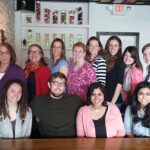
    Above: Dr. Ferguson (top left), Dr. Fine (top second to left) with GenCen Staff in 2014

    About James Harm Beverwyk

    This award honors the humility, humanity, and good humor of an ally who became “family of choice,” friend, and mentor to Deanna Hurlbert, the current Director of the LBGT Resource Center. Throughout his life and career, Jim Beverwyk gravitated toward the most marginalized and oppressed persons – and they to him. He could lift one’s spirit while forcing one to face hard truths. He advocated for, housed, taught, and counseled countless – well beyond his call – and was a true ally in action. Unpretentious and frank, his compassion and unfailing sense of humor endeared him to others more often than not. James Harm Beverwyk, 68, passed away suddenly on December 24, 2013, following a heart attack. Jim is survived by his wife, Mary Parsaca, and daughter Tana Beverwyk-Abouda (all alumni of Michigan State University)


  • Kathryn Meyers Emery Awarded Excellence-in-Teaching Citation & Other Awards

    Kathryn Meyers Emery Awarded Excellence-in-Teaching Citation & Other Awards

    AnthroBlurbMeyersEmery

    Kathryn Meyers Emery was recently awarded one of the highest honors a graduate student at Michigan State University can receive, the Excellence-in-Teaching Citation, presented at the All-University Awards Convocation on February 9, 2016. She was given this award for both her formal and informal teaching of students in a variety of contexts, including Introduction to Archaeology (ANP 203), the Campus Archaeology Field School, and her Graduate School boot camps on digital identity development. In a passage from her nomination, written by Dr. Lynne Goldstein, Meyers Emery was described as “enthusiastic about archaeology, well versed in digital scholarship, and passionate about teaching. A student in her Introduction to Archaeology class described Kathryn Meyers Emery as a teacher: ‘she taught so well that I almost changed my major from physics to one related to archaeology’.”

    The Excellence in Teaching Citation is just one of several achievements for her this year. She also received the MSU Certificate in College Teaching in Fall 2015. The certificate requires the creation of a portfolio of teaching materials, as well as completion of a mentored teaching experience. Meyers Emery’s digital portfolio was recognized as an exemplar and lauded for its high quality. Meyers Emery was also a Future Academic Scholars in Teaching (FAST) Returning Fellow this year. During 2014-15, Meyers Emery participated in the FAST program and conducted research on integrating digital technology into undergraduate teaching. This year, she continued this research and was invited to participate in a Center for Research, Teaching and Learning scholar exchange, where she presented her research at University of Massachusetts Amherst.

    Finally, Meyers Emery’s digital scholarship is being increasingly recognized. In February 2016, she was awarded a travel bursary to present her Cultural Heritage Informatics Initiative project, iedlran: the early Anglo-Saxon Cemetery Mapping Project, at the Annual Meeting of the Medieval Academy of America. In March 2016, Meyers Emery was recognized by Forbes as being of the “8 Awesome Anthropologists Advancing Public Outreach” for her blog Bones Don’t Lie. In addition to this, Meyers Emery and colleague Kristina Kilgrove have been invited to speak at an American Anthropological Association Executive Session, “Bioarchaeologists Speak Out”, organized by Jane Buikstra and Debra Martin, on the topic of blogging and public outreach.

    Meyers Emery will be graduating in May 2016, and has accepted a position at the George Eastman Museum as the Manager of Online Engagement.


  • 2016 Winners of the Annual Fieldwork Photography Contest

    2016 Winners of the Annual Fieldwork Photography Contest

    First place: “Layene religious ceremony” by Emily Riley. Yoff-Layene, Senegal. 2014

    Riley4


    Second place: “Vietnamese Boats” by Edward Glayzer. Hue, Vietnam. 2012

    Glayzer_2


    Third place: “Peruvian Dyes” by Nicole Williams. Chinchero, Peru.

    Williams3


    Honorable Mention: “The Duck Delivery” by Edward Glayzer.  Hue, Vietnam. 2012

    Glayzer_1


    Honorable Mention: “Wedding Blessing” by Emily Riley. Bambey, Senegal. 2014

    Riley1


    Honorable Mention: “Transept with high contrast marble stripes” by Emily Streetman. Siena Cathedral, Siena, Italy. 2015

    Streetman4


    This article appears in our Spring 2016 newsletter. Read the entire newsletter here.

  • Dr. Najib Hourani Speaks at the Harvard Arab Weekend

    Dr. Najib Hourani Speaks at the Harvard Arab Weekend

    This past November, Dr. Najib Hourani was invited to participate in the Harvard Arab Weekend on a panel sponsored by the Graduate School of Design.  The annual event brings together notable academics, political figures, business leaders and diplomats to discuss the pressing issues facing the Arab world.  The panel on which Hourani spoke, entitled Reconstruction and Identity, addressed an audience deeply worried that the reconstruction of Syria, Libya and Yemen may play out as yet another instance of ‘disaster capitalism,’ in which reconstruction is seen by elites and multinational corporations as a window of opportunity for neoliberal reform and private accumulation, with disastrous effects for the people and their urban heritage.

    An urbanist and specialist in post-conflict reconstruction, Dr. Hourani was invited due to his research on Beirut following the 1975-90 Lebanese civil war and the 2006 Israel-Hizballah conflict. Dr. Hourani’s work on post-civil war Beirut highlights how neoliberal approaches to post-conflict environments accelerates the dispossession of peoples when they are most vulnerable, while enabling wartime militias’ consolidation of political and economic power. His dissertation describes how one reconstruction project—an open air shopping area—was framed in neoliberal ideas of the ‘free market’ but was shaped by backroom deals among companies affiliated with the militias during the war.  His subsequent study of Hizballah’s efforts to rebuild after the 2006 war examines a novel NGO-driven approach that sought to resist dispossession of residents in the face of pressure to marketize reconstruction. Though only partially successful in this regard, the effort nonetheless is suggestive of the power of political commitments to people, rather than profit, in ameliorating the trauma of war and in protecting vulnerable populations in its aftermath.

    Dr. Hourani will be visiting Beirut in March to deliver two lectures at the famed American University of Beirut, which is this year celebrating its 150 years as the most prestigious University in the Arab World. Dr. Hourani will also be conducting follow up research toward his book project, entitled Glass Towers and Heritage Trails: Neoliberal Urbanism in Beirut and Amman, and will be meeting with a Beirut-based team planning Syria’s reconstruction at the United Nations Economic and Social Commission of Southwest Asia (ESCWA).

    Capture

  • Lisa Bright Wins SCA Outstanding Student Paper Competition

    Lisa Bright Wins SCA Outstanding Student Paper Competition

    Graduate student Lisa Bright was awarded the Society for California Archaeology Student Paper Competition in March (2016) for her paper titled “Differentiating Hospital Interred Individuals from the Larger Cemetery Population: The Curious Case of SCVMC’s Buttons.” She drew on data from 2012-2014 excavations of the Santa Clara Valley Medical Center Historic cemetery (circa 1875-1935), which included 1,004 individuals. Her project centered on the separation of hospital direct interred individuals from individuals buried from the larger community via artifact and spatial analysis using the presence and absence of specific buttons types and patterns. Individuals with the hospital gown button pattern trended toward clustering, and had statistically significant higher rates of periosteal reactions and fractures.

    The SCA Outstanding Student Paper Competition is open to papers where the student is the sole author, with priority given to papers that present the results of original research and papers that have new analysis or insights based on works with existing collections. The award has been presented at the meetings since 2001.  Lisa plans on publishing the paper in the SCA Proceedings. Congratulations, Lisa!

    lisa bright bio pic


  • Open Position: Visiting Assistant Professor, Archaeology

    The Department of Anthropology at Michigan State University invites applications for a one- year position in historical archaeology, with the potential for a one-year renewal. Areas of specialization are open, although we are particularly interested in candidates with an active research program focused on the Early Historical Period of mid-continental North America. The successful candidate for this position will teach introductory, intermediate, and advanced courses.  Additionally, limited service to the program is expected in relationship to the Campus Archaeology Program. Compelling evidence of scholarly activity and teaching effectiveness is required. 

    A Ph.D. in anthropology is required by date of appointment. Women, minorities, and persons with disabilities are encouraged to apply.  Complete applications will include an application letter including names of three references, CV, statement of teaching philosophy, sample syllabi and up to three publications or manuscripts. At least one of the references must address teaching effectiveness. Electronic submission is required and materials should be uploaded at the MSU website at https://jobs.msu.edu. The closing date for applications is February 29, 2016, or until the position is filled. Questions regarding this position can be addressed to the Search Committee Chair, Dr. William Lovis at lovis@msu.edu.

    Michigan State University is an Affirmative Action/Equal Opportunity Employer. MSU is committed to achieving excellence through a diverse workforces and inclusive culture that encourages all people to reach their full potential. The University actively encourages applications and/or nominations of women, persons of color, veterans and persons with disabilities.

  • GSA organizes water drive for Flint residents

    ANNOUNCEMENT FROM THE GSA:

    We have all heard about the water crisis happening in Flint. Please consider donating bottled water in any size or quantity.

    The state says groups are accepting full cases of commercially packaged water (no loose bottles) and commercially sealed gallon containers of water. Not accepted are canned water, carbonated water, flavored water. Your donations will be collected and taken to the Red Cross in Flint to assist residents in need.

    Donations will be solicited from January 28 – February 12, 2016.

    Please contact Amy Michael (michae76@msu.edu) or Susan Kooiman (kooimans@msu.edu) for more information or to arrange a pick up of water. We are happy to collect your donations if you cannot make it to a drop off point.

    NEW!!: Also accepting monetary donations! You can send these via paypal Amy (michae76@msu.edu) to buy water.

    Drop off locations:

    –          Anthropology GSA Symposium (C103 McDonel Hall)

    January 29th – 8am – 3pm

    –          McDonel Hall – Archaeological Consortium, Room E37

    Open 8am – 5pm

    –          Baker Hall  – 3rd Floor Library

    Thank you for your participation! We hope to fill 2 cars with water from MSU Anthropology to take to Flint.