Department of Anthropology Associate Professor Gabriel Wrobel recently published two co-authored articles in Ancient Mesoamerica as part of a special issue called “The Preceramic and Early Ceramic Periods in Belize and the Central Maya Lowlands.” Ancient Mesoamerica is a flagship journal for Mesoamerican archaeology published by Cambridge Press, and both articles are open access, through an agreement between the MSU Library and Cambridge Press.
The first article is titled “Life And Death Among The Earliest Maya: A Review Of Early And Middle Preclassic Burials From The Maya World”, and is co-authored by Dr. Raúl Alejandro López Pérez (Universidad Autónoma de Yucatán), and Dr. Claire Ebert (University of Pittsburgh). It discusses the earliest Maya skeletal remains and the need for coordinated research into the biology of early groups.
Abstract: “This article presents a review of the earliest Maya skeletal remains thus far found, including a list of 398 burials dating to the Early (1800–900 B.C.) and Middle Preclassic periods (900–300 B.C.) and adjacent regions. These sites are spread throughout the Maya region and the data allow basic descriptive syntheses about early mortuary behavior and aspects of health and diet. Poor preservation and differences in scoring and reporting severely limit the scope of interpretation possible at this point, but it is hoped that this review stimulates coordinated research into the biology of early groups.”
The second article is titled “Before The Maya: A Review Of Paleoindian And Archaic Human Skeletons Found In The Maya Region” and is co-authored by Dr. Julie Hoggarth (Baylor University), and PhD student Aubree Marshall. This article discusses skeletal remains found in Mexico and Belize dating to the Paleoindian and Archaic periods.
Abstract: “This article presents a review of the earliest known skeletal remains in the Maya area, which are found in submerged caves in Mexico and rock shelters in Belize and date to the Paleoindian and Archaic periods. While few in number, several of these individuals have been the focus of intensive analyses, providing an emerging picture of life in the region before the transition to agriculture and settled village communities.”
Alexis Goots and Micayla Spiros discuss some x-rays with anthropology faculty member Carolyn Isaac in the new MSU Forensic Anthropology Lab in Giltner Hall.
During the summer of 2021, the Michigan State University Forensic Anthropology Lab (MSUFAL), moved from its longtime home in East Fee Hall to a new laboratory and teaching space in Giltner Hall. The move has been bittersweet, due to the history of groundbreaking research and fruitful collaborations that were forged in East Fee Hall, but the new lab in Giltner offers the opportunity to expand the consulting, training, and research for which MSUFAL is known.
The MSUFAL has been an integral part of the MSU landscape since the 1970s, providing a variety of forensic services including forensic archaeological recovery, decedent identification, trauma analysis, and expert witness testimony. The lab has provided these services for diverse types of cases such as positive identification of unidentified human remains, human skeletal analysis, trauma analysis, human vs. nonhuman bone, and field search and recovery. The forensic anthropology faculty comprises Dr. Todd Fenton, who is currently serving as Department Chair until 2024, Dr. Joe Hefner, and Dr. Carolyn Isaac, the current lab director.
From the late 1970s to the late 1990s, the MSUFAL, under the direction of Dr. Norm Sauer, was housed in the basement of an administration building on campus, which offered very little analytical space and only one small sink. During this time, most of MSUFAL’s work was done at the local morgue, as the on-campus laboratory facilities were not conducive to forensic casework. In the mid-1990s, the MSUFAL moved to its most recent home in East Fee Hall, where the larger space and the addition of Dr. Fenton to the faculty allowed casework, teaching, and research efforts to substantially expand.
Throughout the two decades during which the MSUFAL called East Fee Hall home, members of the MSUFAL participated in trauma research, ancestry research, bioarchaeology projects and dissertations, skull-photo superimposition, forensic image comparisons, and countless forensic cases. In addition, the location in East Fee Hall allowed for close collaboration with the anatomy department, medical school, and biomechanical engineers, all of whom also had labs in the building. While the MSUFAL was housed in East Fee Hall, MSUFAL faculty and graduate students consulted on over 1,200 forensic cases, averaging approximately 60 forensic cases per year. Further, over the past 14 years, MSUFAL faculty have garnered over $5,000,000 in external research funding, cementing MSUFAL as one of the premier forensic anthropology research laboratories in the country.
Given MSUFAL’s expanding faculty, increasing casework, and new research initiatives, and despite the great success of students and faculty over the last five decades, it became clear that the lab had finally outgrown the space in East Fee Hall. In May 2021, faculty and students packed up the laboratory and moved to a beautiful new space in Giltner Hall. This move was motivated by the prospect of a larger space and being in the same building as the other physical anthropologists, as well as Giltner’s proximity to the rest of the department in Baker Hall.
Alexis Goots works in the new MSU Forensic Anthropology Lab in Giltner Hall.
The new lab space in Giltner Hall has proven to be an upgrade in many ways, with its centralized location being perhaps the greatest advantage. Instead of the disparate lab spaces of East Fee, the new Giltner lab boasts a connected dry lab, wet lab, radiography and photography space, grad student office, lab director office, and a large classroom. Overall, the new lab is an ideal place to conduct sensitive casework, safely and securely house skeletal material, conduct meaningful research, and train the next generation of forensic anthropologists!
Please Note: This statement refers to events that may trigger traumatic memories for members of our community. Resources and assistance are available through the Center for Survivors1, MSU Safe Place2, Counseling and Psychiatric Services3 and the Employee Assistance Program4.
The Department of Anthropology is committed to fostering an inclusive, safe, and welcoming environment where all faculty, staff and students are valued, respected, and celebrated. Foremost in our priorities is the physical and emotional safety of our students, faculty, and staff. We also validate and stand by survivors of sexual harassment and misconduct, sexual abuse, and relationship violence; recognizing that all too often their voices are not heard and their stories not believed1. We know that it is our responsibility to not only listen to survivors, but also to serve as active bystanders, willing to intervene when we observe actions that threaten our community’s safety and violate our deeply held beliefs.
As such, we acknowledge the seriousness of RVSM and Title IX violations in the university and are committed to taking action with regard to the violations that arise in our department, including our classes, offices, labs, and field schools. We do this while following all department, college, and campus policies and procedures, including the Anti-Discrimination Policy (ADP)5, Relationship Violence and Sexual Misconduct (RVSM)6, Mandatory Reporting7, and Pregnant and Parenting Student policy8.
Training and education on campus policies has been and continues to be taken seriously in the Department of Anthropology. All faculty and staff are current in their required RSVM training as mandated by MSU; however, we recognize that it is our responsibility to ensure that everyone in our department knows how to put this training into practice. We have proactively taken continuing educational measures for faculty through participation in a Prevention, Outreach, and Education (POE)9 workshop on Monday, January 25, 2021. At this time, we ask that all faculty, staff, and students review RVSM and Title IX policy terms and examples10 and reporting requirements11. We also remind all faculty and staff members that any sexual misconduct divulged to them in the context of their position must be reported to the Office of Institutional Equity (OIE)12 as per university policy.
Furthermore, we encourage anyone who has experienced discrimination, harassment, or retaliation to contact the OIE. Any individual who experiences conduct that violates the criminal law is encouraged to contact MSU Police13 and local law enforcement. Michigan State University also provides Confidential Resources14 free of charge where those who experienced relationship violence or sexual misconduct may explore their options, talk about what happened, and obtain support services. The Department of Anthropology has and will continue to prioritize a healthy and safe environment for students, staff, and faculty, while striving for diversity, equity, and inclusion. Misconduct of any sort is unacceptable as is the silencing of any victim. It is our duty to unite and raise awareness to enhance the safety and proper conduct of our university.
We see our commitment to providing a safe environment as part of our larger departmental efforts to increase and sustain diversity, equity, and inclusion. The diversity that each and every one of us brings to the department and to the university is immense, and a source of our strength. We recognize that making spaces safe and welcoming is utmost in fostering an inclusive culture.
Heath-Stout, Laura E. (2020) Who Writes about Archaeology? An Intersectional Study of Authorship in Archaeological Journals, American Antiquity, Volume 85, Issue 3, July 2020, pp. 407 – 426. https://doi.org/10.1017/aaq.2020.28
Voss, Barbara L. (2021a) Documenting Cultures of Harassment in Archaeology: A Review and Analysis of Quantitative and Qualitative Research Studies, American Antiquity, Volume 86, Issue 2, April 2021, pp. 244 – 260. https://doi.org/10.1017/aaq.2020.118
Voss, Barbara L. (2021b) Disrupting Cultures of Harassment in Archaeology: Social Environmental and Trauma-Informed Approaches to Disciplinary Transformation, American Antiquity, Volume 86, Issue 3, July 2021, pp. 447 – 464. https://doi.org/10.1017/aaq.2021.19
MSU investigators Claire Margerison (Department of Epidemiology & Biostatistics), Danielle Gartner (Department of Epidemiology & Biostatistics, Sault Ste. Marie Tribe of Chippewa Indians) and Heather Howard-Bobiwash (Department of Anthropology) were recently awarded a grant under the Robert Wood Johnson Foundation Public Policy Research to Advance Racial Equity and Racial Justice program for their proposal entitled “Assessing whether Indigenous women of reproductive age had equitable access to and use of health care under the Affordable Care Act.” As a group, Indigenous pregnant and birthing persons experience high rates of morbidity and mortality while they also often hold citizenship in sovereign Indigenous Nations with whom the United States has agreements of fiduciary responsibility. In partnership with an advisory board of Indigenous health services and policy experts, this project will combine qualitative and quantitative research analyzing national datasets and interviews with expert consultants to provide understanding of how to make federal health policy work equitably for Indigenous people in the US.
The Department of Anthropology is pleased to introduce the new NAGPRA (Native American Graves Protection and Repatriation Act) Program Manager, MSU Anthropology alum Jessica Yann, who began this role in August 2021. Although the role is based in the Office of the Associate Provost for University Collections and Art Initiatives, Jessica also continues to work with the archaeology collections and teach through the Department of Anthropology.
This position is designed to create and take a proactive approach to NAGPRA compliance and outreach, including creating a strategic plan for effectively implementing NAGPRA work. This includes auditing collections for potentially NAGPRA eligible ancestors or objects, writing grants to facilitate collections research, management, and outreach with Tribal communities, facilitating consultations, creating draft Inventories and Summaries in collaboration with Tribal partners, facilitating respectful repatriations and returns, curating the NAGPRA collections, and ensuring that MSU stewards all collections according to the policies and procedures in the MSU NAGPRA and MSU Collections Policies.
Jessica started at MSU as a graduate student in the Department of Anthropology, completing her PhD degree in 2019. She took over as the NAGPRA Assistant in March of 2019 and continued in that capacity until beginning her current role in August. Prior to Jessica’s position as the NAGPRA Assistant, she worked with the State Archaeologist in the Michigan State Historic Preservation Office for 9.5 years, an experience that Jessica credits with having been incredibly helpful in her new role as Program Manager.
Jessica notes that she is excited to continue to consult and collaborate with all the Tribes that are connected to Michigan as she helps continue the journey towards repatriation and rematriation, stating “I’m honored by the privilege of assisting them in this work, and thankful for the trust they have placed in me.”
In her free time, Jessica enjoys dabbling in arts and crafts, trying crazy new recipes, and running. We look forward to all the amazing work Jessica will do in her new role!
The Department of Anthropology is proud to announce three new scholarships, each generously funded by an MSU Anthropology alum! These scholarships will allow undergraduate and graduate students in the department to embark on travel, undertake research, and gain educational experiences that may not have otherwise been possible.
First, with the financial support of alum Aaron Whiteford, the Whiteford Cultural Anthropology Fieldwork Scholarship has been established. Preference will be given to students conducting research in Latin America. The inaugural scholarship has recently been awarded to PhD student, Juan Carlos Rico Noguera.
Second, with the financial support of archaeology alum Don Weir, the Commonwealth Heritage Group Diversity Scholarship Award in Archaeology at Michigan State University has been established. Students who are or have been enrolled in archaeology courses and who have high financial need will be considered for this award. Preference will also be given to students who are first generation to attend college and/or are educationally disadvantaged. Special consideration shall be given to ensure that this scholarship supports the Donor’s desire of building and supporting a culture of diversity and inclusion in the Department of Anthropology.
Third, with the financial support of alum Emily Altimare, the Altimare Professional Development Scholarship has been established. This scholarship will support graduate students in the Department – the funds can be used for professional development support including conference training to learn new skills, online certifications, qualitative data analysis software, etc.
We are extremely grateful for these generous donations, which will allow our students to expand their educational horizons and become successful and marketable anthropologists.
This edition of the Department of Anthropology newsletter highlights outstanding faculty, students, and alumni and invites you to learn more about their work across the diverse fields of anthropology.
Although we are still navigating the global pandemic and following MSU safety mandates and protocols in accordance with directives from health and government officials, this fall semester we were delighted to welcome students back to campus to provide more experiential learning opportunities. We celebrate the ability to once again safely engage with students in the classroom and in the field, and appreciate the ways in which we have adapted and incorporated new technologies into every aspect of our work. The tremendous effort and patience in adapting to this situation from across the Department of Anthropology deserves profound recognition.
Despite the obstacles we have recently faced, we have also enjoyed commemorating many accomplishments across the department this semester. In fact, we are looking forward to celebrating the graduating class of 2021 in December at an in-person commencement ceremony.
This semester, we have honored faculty who have been recognized at the college level for their research that makes an impact in diversity, equity, and inclusion. Additionally, we have celebrated faculty who have received grants and published because of their timely research. We are also pleased to announce the new Forensic Anthropology lab space, as well as three new student scholarships. Additionally, the Department of Anthropology was honored to host the Midwest Archaeology Conference this year, and to recognize alumnus Don Weir for his important contributions to the field of archaeology and the Department of Anthropology at MSU.
In the midst of this global pandemic, many have regrettably experienced grief over the loss of family or friends, missed opportunities, unfulfilled endings, and imminent uncertainties. While it is difficult to reconcile these feelings of loss, I am grateful for how the people in this department have consoled and supported one another as we have navigated through these complicated times. My sincere pride in this department has only strengthened as we continue to navigate challenging times while continuing our mission. The Department of Anthropology has demonstrated its unwavering dedication to provide an exceptional education for our students and to engage in meaningful research, even when faced with unprecedented adversity. We will carry this commitment forward in the upcoming new year as we continue to manage ongoing challenges while prioritizing everyone’s health and safety.
Department of Anthropology Assistant Professor Kurt Rademaker recently published an article in Quaternary International. The article is titled “Comprehensive mapping and compositional analysis of the Alca obsidian source, Peru.” The article discusses the extent and composition of the Alca obsidian source as well as behavioral information about the humans who interacted with this obsidian source over a 12,000 year span.
Abstract: “The Alca obsidian source in southern Peru is one of the largest and most geochemically complex sources of volcanic glass in South America. Hunter-gatherers first discovered and used Alca obsidian for stone tools at the end of the Pleistocene. Alca later became one of the three most economically important and widely distributed sources of obsidian in the Central Andean region. Systematic mapping and geochemical characterization efforts spanning 20+ years have revealed an extensive high-elevation source region composed of six geographically and compositionally distinct sub-sources. Here we synthesize research documenting the 2000 km2 spatial extent of the Alca obsidian source, and we present expanded geochemical datasets for six Alca sub-sources (n = 238 geologic samples) obtained using neutron activation analysis (NAA), laboratory x-ray fluorescence (XRF), and portable (p)XRF. Results for Alca and for six other major obsidian sources in the Peruvian Andes illustrate the efficacy of these techniques to discriminate all major Peruvian obsidian sources, including Alca sub-sources. Comprehensive compositional data from the Alca source area, examined against accumulating obsidian artifact datasets from throughout Peru, reveal past human use of various Alca sub-sources. These cases contribute fine-grained behavioral information, made possible by a complex obsidian source with geographically patterned geochemical variation and a >12,000-year sequence of human interaction with this geologic resource.”
As a kid, Don Weir followed his dad — an amateur archaeologist working with University of Michigan in the 1930s — around archaeological sites, collecting arrowheads and attending meetings. Looking back, it was a unique way to grow up, surrounded by people unearthing and analyzing artifacts. But as a kid who has many other important interests, meetings and digs weren’t Weir’s favorite.
That was until he came to Michigan State University in 1968 as part of an archaeology work study with the MSU Museum followed by a 10-week archaeological field school in in Northern Michigan directed by Charles Cleland, Ph.D., with field director William Lovis, Ph.D. Both of the individuals played an important role in mentoring him to be a future professional archaeologist.
“Doing my first field season with them in 1969 did it,” he said. “That’s when I decided what I wanted to do: be a full-time archaeologist.”
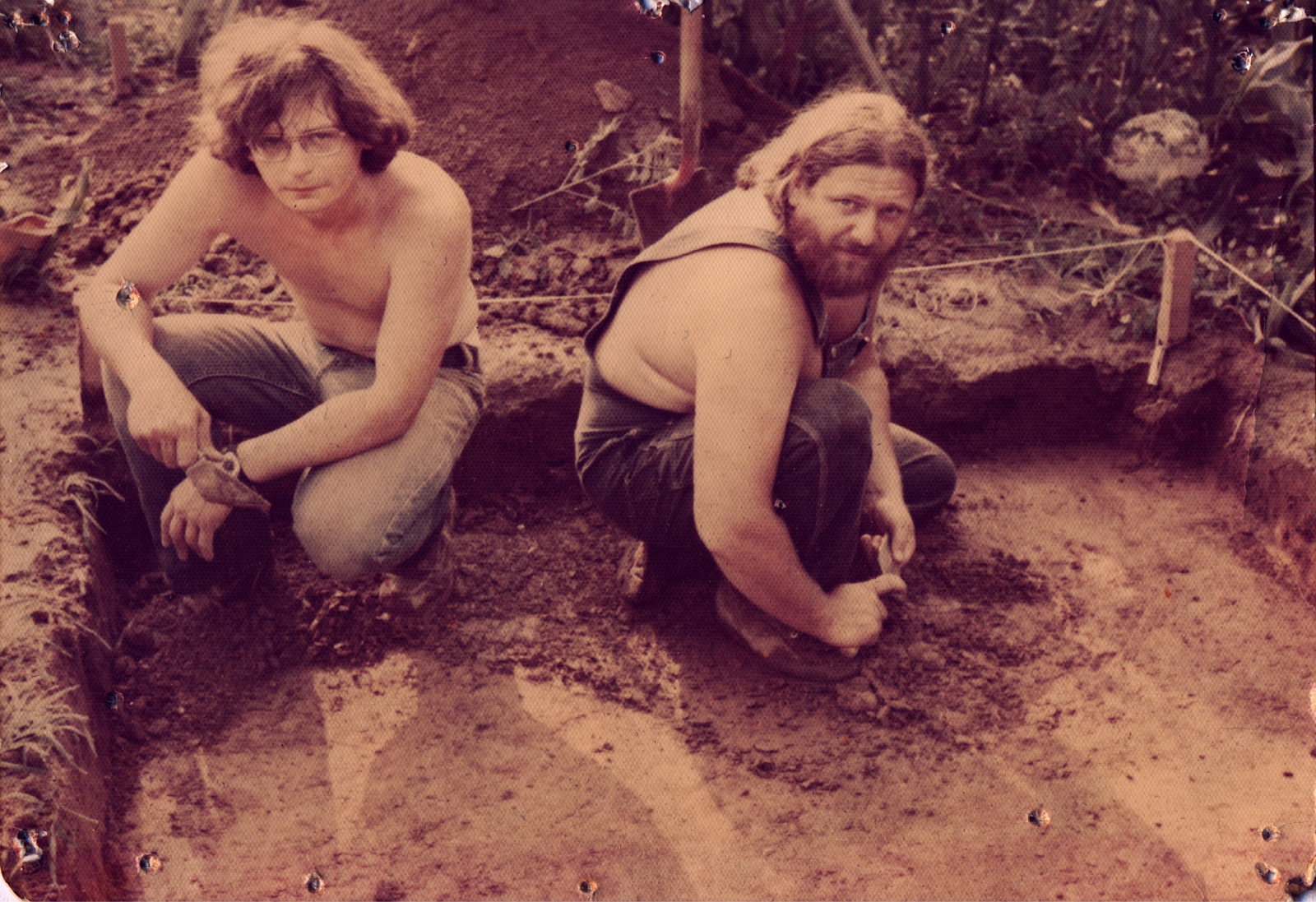
Caption: Don Weir (right) at a field site in Kentucky in 1970.
After graduating from MSU in 1970, Weir worked for Gilbert/Commonwealth Associates as a full-time archaeologist, then decided to continue his education returning to MSU.
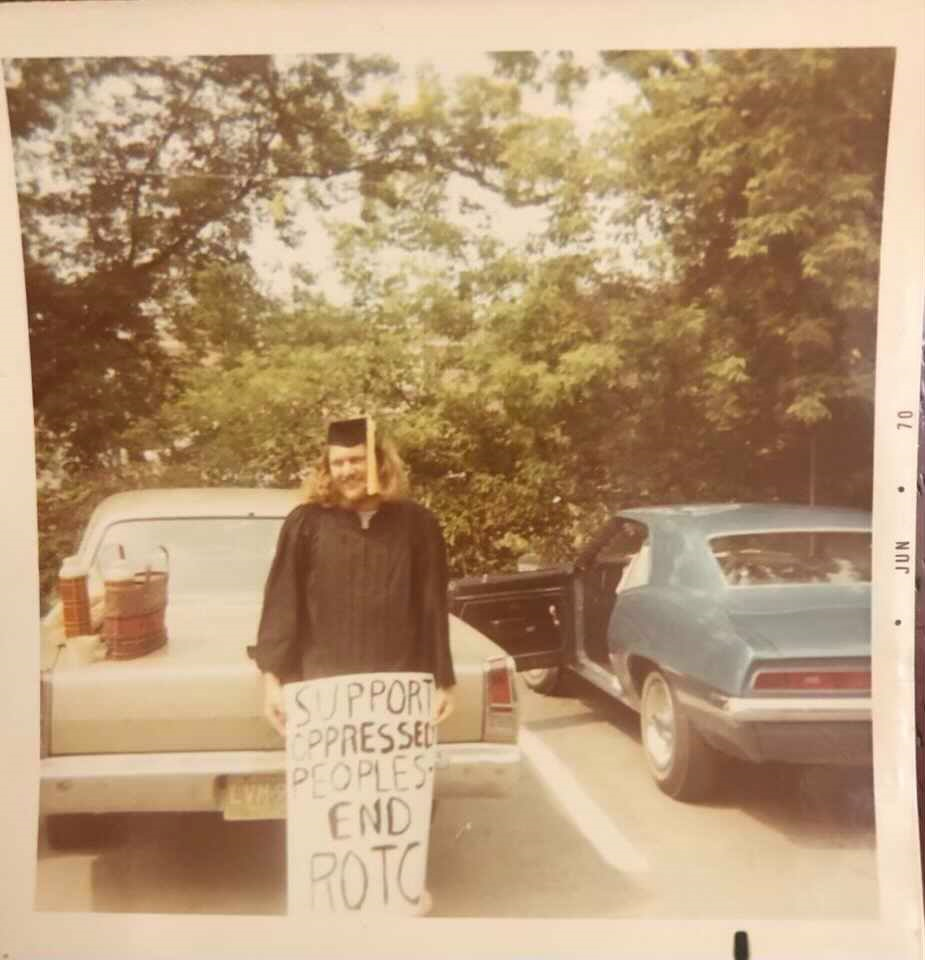
Caption: Don Weir graduates from MSU in 1970.
“In ‘76, I worked full time and went to graduate school full time with two kids, it was interesting at best,” he mused.
He graduated in 1979 with his M.A. from MSU and continued his work with Gilbert/Commonwealth Associates, an architectural and engineering firm. In 1988, he began his own cultural resources management company, Commonwealth Cultural Resources Group with Dr. Donna Roper.
Cultural resources management (CRM) is part of the National Historic Preservation Act and the National Environmental Policy Act. Both require companies that are either licensed, permitted or funded by the federal government to take into consideration their impacts on archaeological and historic sites.
“CRM is important because It’s the one mechanism we have to save archaeological sites from being destroyed during construction,” he said.
For example, Weir worked with the City of Detroit during the building of the People Mover in the 1980s. He’s also worked to evaluate and preserve sites during multistate pipeline projects and in national forests.
“It’s a viable career, and I’ve lectured at Michigan State several times to archaeology students,” he said. “There are viable alternatives to getting a Ph.D. and being a professor someplace. There are jobs at federal and state agencies and private firms, like mine.”
Whether sharing through lectures or meeting with students one-on-one, Weir wants to share his story with the next generation of archaeologists, so they understand the breadth of opportunities they have in the field.
“In fact, I just met with an MSU graduate student, and we had a 2-hour conversation about what his options might be outside of the academy.
Weir has a passion for the next generation, and in addition to giving of his time, he has also given to MSU through funding scholarships. The first is the Archaeology Alumni and Friends Fund.
“Those funds are to bring in guest speakers into the department so that undergraduates and graduates have a chance to learn from outside experts,” he said.
Most recently, Weir and his son, Andy Weir, have set up the Commonwealth Heritage Group Diversity Scholarship Award in Archaeology at MSU for undergraduate and graduate students who are or who have been enrolled in archaeology courses offered by the Department of Anthropology.
“Diversity is a big issue in archaeology and anthropology, especially in archaeology,” he said. “When I went into the profession, it was 90% white male, and it’s now probably 60% female, 40% male, but still 90% white. So I want to encourage diversity in the profession, and I think the profession lacks that, and it will be to the betterment of society, and it’s important to have diversity in archaeology especially with indigenous archaeologists.”
“We appreciate Don’s support of our department and support of our students,” said Todd Fenton, Ph.D., and chair of the MSU Department of Anthropology. “He has given generously of his time to talk with our students and by providing funding to support their education and development.”
Through Weir’s company, which he ran until 2017 when he retired, he is proud to have hired MSU graduates and mentored young archaeology professionals.
“I’ve mentored a lot of those young professionals in the company to be able to function in the business world in addition to the world of archaeology,” he said.
Weir has also been an advocate for archaeology, visiting state and federal representatives to share how policy impacts the field. This year, he visited Washington D.C. to share about Biden’s infrastructure bill.
“I talked with our senators, representatives and their staff about how important it is that infrastructure projects are done in a way to protect historical and archaeological resources,” he said.
In October 2021, Weir received the Distinguished Career Award from the Michigan Archaeological Conference (MAC) which recognizes archaeologists who have demonstrated excellence and contributed significantly and regularly to the advancement of Midwestern archaeology.
“Throughout his career Don has mentored many students and employees through professional development opportunities, and he has shared his knowledge and passion for stewardship of the past at universities, professional organizations, government agencies, and other nonacademic organizations,” said Janet Brashler, MAC president. “He continues to support students through scholarships and always has a kind word for students and colleagues. We are pleased to acknowledge Don for his contributions to Midwest archaeology by awarding him the Distinguished Career Award.”
Caption: Don Weir (right) receives the Distinguished Career Award presented by Janet Brashler (right), MAC president.
This award is the highest one made by MAC and honors someone with a lifetime commitment to Midwestern archaeology and achievement in areas such as research, publication, collection and site preservation, program development, and education.
“The award was really special because I received it in East Lansing where I studied for my career,” Weir said. “It’s an organization that is strictly an archaeological organization, historically they are primarily academics in it, so it was special to be recognized by that group.”
Weir has received multiple awards for his contributions to the field. He was awarded the 2010 McGimsey-Davis Distinguished Service Award by the Register of Professional Archaeologists, the 2017 ACRA Lifetime Achievement Award by the American Cultural Resources Association, and the 2018 Lifetime Achievement Award from the Michigan Historic Preservation Network.
As evidenced by widespread recognition in the field, Weir has had a far-reaching impact on the field of archaeology. He has been looking back on his legacy and reflecting on his achievements.
“I’m really proud of starting and running one of the largest and most successful CRM companies in the country,” he said. “I’m also proud that we’re able to do that and also do excellent work. Also, that I’ve given back to the profession: I’ve also encouraged my employees to be active professionally and provided professional development opportunities for them.”
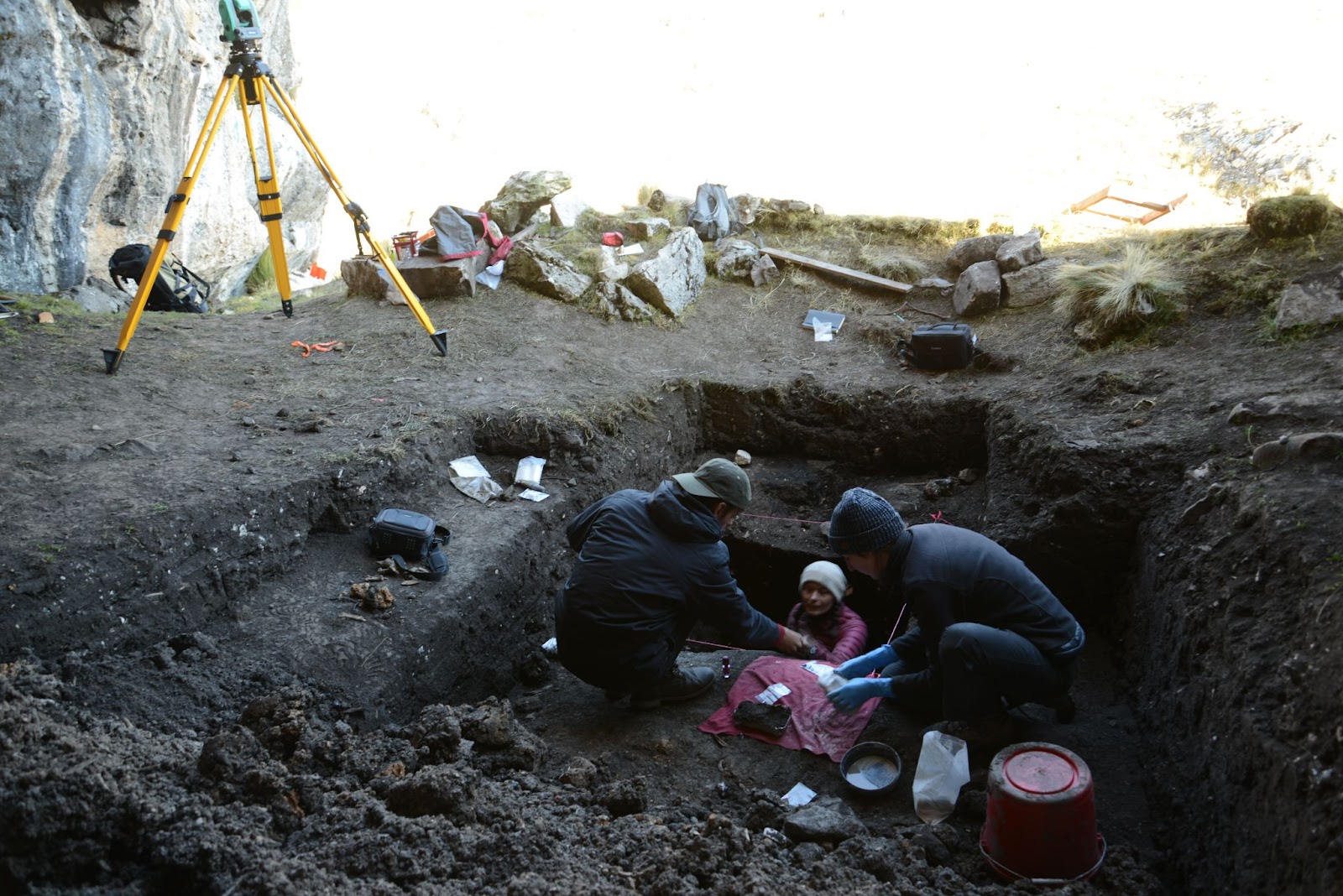
Doctoral student Sarah Meinekat working with other graduate students at the Cuncaicha rock shelter archaeological site.
The intersection of archaeology and geology tells the story of human connection and interaction with the earth. What if we could go back in time to understand how people lived in the highest altitudes in the Americas across time? The archaeological and geological record has left behind clues for MSU Department of Anthropology Assistant Professor Kurt Rademaker and his team.
“People at the end of the last Ice Age managed to live in the high Andes, an extremely challenging environment where modern nighttime temperatures drop to -10 C (15 degrees F) and where there is only 60% of the oxygen pressure relative to sea level,” Rademaker said.
“This highlights how incredibly adaptive our species is. This archaeological site records evidence of wet and dry climate phases over the past 12,000 years, and it shows that people shifted their settlement strategies according to those changes. Archaeology can be a powerful tool to learn about the relationship between people and their environments.”
Most recently, Rademaker and his team have published a new paper in the journal Geoarchaeology called “A site formation model for Cuncaicha rock shelter: Depositional and post-depositional processes at the high-altitude keysite in the Peruvian Andes” Rademaker and co-author Christopher Miller advise Sarah Meinekat, who is a doctoral student at the University of Tübingen and the publication’s lead author. The paper presents a detailed sequence of site formation processes and environmental change recorded in the highest-elevation Pleistocene archaeological site in the Americas. At 4480 m (14,700 feet) above sea level, the Cuncaicha rockshelter is the highest-elevation Pleistocene (Ice Age) archaeological site in the Americas
“The site contains a well-preserved record of episodic human occupations over the past 12,300 years,” Rademaker said. “Our team applied cutting-edge techniques to study the natural and human processes that formed the site’s sediment sequence. These methods have been applied to very early few sites in South America, but doing so is important for making reliable interpretations about past human behavior.”
The team learned two key insights during this phase of their research.
“One, we gained insights on the intensity of occupation through time, which tells us how people were using the site,” he explained. “The sediments show that people generated large quantities of ash from campfires and dense accumulations of artifacts and plant and animal remains, consistent with using the site as a residential campsite. Two, the timing of site occupations and abandonments is not accidental. The high resolution of our radiocarbon dating and stratigraphy links the site occupations with wetter climate phases and abandonments with arid phases.”
Rademaker has enjoyed being an advisor and mentor to Meinekat, doctoral candidate at the University of Tübingen.
“Sarah has done outstanding work on one of South America’s most important early archaeological sites! She is currently conducting similar investigations on other early sites in the Andes and Pacific coast of South America.”
To read their publication, visit http://doi.org/10.1002/gea.21889.