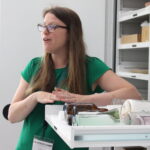
• Dr. Chantal Tetreault’s ANP 420: Language and Cultures partnership with Lab for Education & Advancement in Digital Research (LEADR) to teach students about online research was showcased in MSU Digital Humanities Newsletter

    Staff members in the Lab for Education & Advancement in Digital Research (LEADR) collaborate with History and Anthropology faculty to incorporate digital research methods into a variety of classes each semester. This fall Dr. A. L. McMichael (Director, LEADR) and Dr. Chantal Tetreault (Associate Professor, Anthropology) continued a tradition of collaborating on ANP 420: Language and Cultures that began in 2014. This time they worked closely with LEADR Graduate Assistant Marcela Omans-McKeeby (PhD candidate, Anthropology) to focus students’ attention on current modes of communication and styles of language online.

    Read the full story here: https://us17.campaign-archive.com/?u=8be39096da7cf33f13b95046a&id=f7369bf226

  • Assistant Professor Dr. Kurt Rademaker Publishes in PaleoAmerica

    Department of Anthropology Assistant Professor Dr. Kurt Rademaker and co-authors Justin A. Holcomb (lead-author), Rolfe D. Mandel, Erik Otárola-Castillo, Richard L. Rosencrance, Katelyn N. McDonough, D. Shane Miller, and Brian T. Wygal recently published in the journal, PaleoAmerica. The article, titled, “Does the evidence at Arroyo del Vizcaíno (Uruguay) support the claim of human occupation 30,000 years ago?” provides a detailed critique of a purported pre-Clovis archaeological site in Uruguay.

    Read the full article at: https://doi.org/10.1080/20555563.2022.2135476

    Abstract: Researchers at Arroyo del Vizcaíno (AdV), Uruguay, have argued that human occupation dates prior to the Last Glacial Maximum (33,000–31,000 cal BP) based on the presence of purported stone tools and cutmarks on bones. We provide a summary of their research and critically evaluate these claims. We conclude that the claims of a pre-LGM occupation at AdV are unsupported due to: (1) equivocal evidence that the purported stone tools are culturally modified; (2) insufficiently documented spatial and contextual information; (3) inadequate geological research leading to an unconvincing site formation model; and (4) inadequate testing of alternative hypotheses for bones with surface modifications. We conclude that the site is best interpreted as a natural time-transgressive accumulation of mammal bones and other organic and inorganic materials within a fluvial setting spanning four millennia, and that bone surface modifications are the product of natural site formation processes rather than human agency.

  • Anthropology professor and former chair Dr. Jodie O’Gorman receives distinguished award and reflects on career

    Anthropology professor and former chair Dr. Jodie O’Gorman receives distinguished award and reflects on career

    By Katie Nicpon

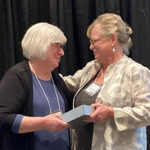
    Dr. Jan Brashler (left), MAC President and MSU alumna, presents Dr. Jodie O’Gorman (right) with the Distinguished Career Award at the annual Midwest Archaeological Conference.

    During the annual Midwest Archaeological Conference (MAC), Dr. Jodie O’Gorman, MSU Department of Anthropology professor, received the Distinguished Career Award that recognizes archaeologists who have demonstrated excellence and contributed significantly and regularly to the advancement of Midwestern archaeology.

    “I”m honored to receive the Distinguished Career Award and I’m very grateful to those who took the time to nominate me and write in support of the nomination,” Dr. O’Gorman said. 

    The award has deep meaning for O’Gorman because the MAC has been a valuable part of her professional life since graduate school. 

    “I gave my first professional paper at a MAC meeting decades ago, and participating in the organization has taught me a lot over the years about professionalism and advocacy – and of course the archaeology of the midcontinent. I’ve served as a board member, secretary, and president of the organization, and helped host two of its annual meetings in East Lansing.” 

    Additionally, receiving the award in La Crosse, Wisconsin held special meaning for Dr. O’Gorman because her roots are nearby on the Minnesota side of the Mississippi Valley, and she spent summers in La Crosse from 1987-1990 working for the Wisconsin State Historical Society on a complex of village sites outside the city. Her dissertation research emerged from that project.  

    As part of the MAC conference, Drs. Lynne Goldstein (MSU Professor Emerita of Anthropology) and Jenn Bengtson (Associate Professor, Southeast Missouri State University) put together a symposium in her honor titled, “Migration, Gender, Foodways, and Collections in the Midwestern U.S.: Various Pathways in Honor of Jodie O’Gorman.” The symposium featured studies that explored a few of Jodie O’Gorman’s major research interests. A number of her colleagues and former students wanted to honor Jodie and highlight her significant impact on archaeology in the Midwestern U.S.

    Dr. O’Gorman’s research interests have focused on Native American village life in the midcontinent of North America from about AD 1000 to 1700s. Archaeologists identify many different cultural traditions in the midcontinent during this period and she has been interested in the relationships of different groups within and between communities.

    “Many people were living in substantial villages during this time and some of the villages and towns can be described as multi-ethnic,” she said. “I’m interested in how people negotiated their interactions and how ideas and practices both created and maintained relationships between people and between people and their landscape. Throughout my career, I’ve been particularly interested in how the role of women and their agency in foodways play into these interactions.” 

    Dr. O’Gorman plans to retire September 1, 2023, and is beginning to reflect on her career.

    “I’m very proud of the Morton Village research project I’ve been co-directing for almost 15 years now,” she reminisced. “Our field and lab work at the site has been the focus or contributed to eight dissertations and many publications have come from the research. My students, the co-PI, collaborators, and myself have come to interpret the multi-ethnic site in new ways and colleagues are realizing how important this example is to how we understand ancient patterns of Native American cultural interactions across the broader region.”

    She has also spent time reflecting on the students she has taught in field schools and other archaeology courses.

    “I enjoyed my time with them very much and many individuals stand out – mostly for positive reasons! I am proud of them all whether they pursued careers in archaeology or simply moved on having learned more about archaeology. I’m especially thankful for having the opportunity to work with Native American students and colleagues at MSU; they’ve helped me understand more fully the importance of different perspectives and made me a better archaeologist.”

    Upon her retirement, Dr. O’Gorman plans to explore a variety of research and other interests that fell by the wayside during the past forty years. 

    “But my top goal is to spend more time with my family, especially my grandchildren,” she said.  “And my partner, and enjoy our cabin in the woods, tend my gardens, fish more, read more, paint more, write different things – the list goes on.” 

    Dr. O’Gorman joined the MSU Department of Anthropology in 2000 and served as the department chair for nine years. 

    “We’re so grateful to Jodie for her dedication to our students, our colleagues, our community partners and the field,” Todd Fenton, Ph.D., said, professor and current department chair. “We especially appreciate Jodie’s service as our chair for nine  years. We wish her so much joy and time with loved ones during her retirement.” 

    To learn more about Dr. O’Gorman, visit anthropology.msu.edu.

  • Professor Emeritus Dr. William Lovis, Assistant Professor Dr. Kurt Rademaker, Adjunct Associate Professor Dr. Randolph Donahue, MSU graduates, and Geography colleagues publish in the journal PaleoAmerica

    Department of Anthropology Professor Emeritus Dr. William Lovis, Assistant Professor Dr. Kurt Rademaker, Adjunct Associate Professor Dr. Randolph Donahue, MSU graduates, and Geography colleagues publish in the journal PaleoAmerica on the 12,200- to 11,600-year-old Hipwater PaleoIndian site in southern Michigan. PaleoAmerica is the premier international journal for research on the earliest human entries into the Western Hemisphere.This interdisciplinary and interinstitutional collaboration included MSU PhD Dr. Dillon Carr, Grand Rapids Community College, MSU Geography Professor Dr. Alan Arbogast, and US Geological Survey Geospatial Scientist Dr. Kevin McKeehan. The research brought to bear a broad range of expertise in postglacial landscapes and geoarchaeology, the organization of stone tool production, elemental analysis of raw materials, lithic microwear analysis of stone tool function, and through the PaleoResearch Institute, the identification of protein residues on stone tool surfaces.  PaleoIndian sites across the Great Lakes region are uncommon, particularly from this time period known as the Parkhill Phase. Analysis of the Hipwater assemblage reveals how the multidisciplinary application of multiple contemporary analytic approaches can greatly enhance our understanding of even some of the earliest postglacial occupations of the Great Lakes region.

    Read the full article at: https://doi-org.proxy1.cl.msu.edu/10.1080/20555563.2022.2135478

    Abstract: The Hipwater Locale is a small Parkhill Phase Middle Paleoindian (ca. 12,200–11,600 cal yr BP) assemblage from south central lower Michigan, recovered by the property owners and the lead author. Interdisciplinary analysis reveals that the locale is likely a short term but intensive discard location with an assemblage composed of unfinished and broken fluted and unfluted bifaces with almost no associated debitage. There is evidence for a hearth in the form of soil discoloration, fire-cracked rock, color and structural alteration of tool stone, and thermal fractures. Tool-stone sources are local Bayport chert as assessed through hand-specimen characteristics and portable X-ray fluorescence analyses. Microwear and protein residue analyses corroborate the use of one tool fragment for use on rabbit/hare or deer/elk. Implications of the several analyses are discussed and synthesized.

  • Ph.D. Student Grace Shu Gerloff Publishes in Adoption & Culture

    Department of Anthropology Ph.D. Student Grace Shu Gerloff published an op-ed in the special issue of the Alliance for the Study of Adoption and Culture journal, Adoption and Culture. The op-ed, titled, “Beyond Feelings: What’s Missing from Trauma-Centered Adoption Narratives,” problematizes overly pathological framings of adoption and encourages consideration for the ways adoption—and trauma—exist as products of institutional failures.

    Read the full article athttps://doi.org/10.1353/ado.0.0016

    Abstract: Many have criticized adoption as an abortion alternative due to the emotional trauma involved. However, these critiques often miss a more concerning aspect of adoption: what factors produce “adoptable” children? This essay problematizes overly pathological framings of adoption and encourages consideration for the ways adoption—and trauma—exist as products of institutional failures.

  • Associate Professor Ethan Watrall Elected as a Fellow of the Society of Antiquaries

    Associate Professor Ethan Watrall Elected as a Fellow of the Society of Antiquaries

    The Department of Anthropology is pleased to announce that Associate Professor Dr. Ethan Watrall has been named a Fellow of the Society of Antiquaries. 

    Founded in 1707 and granted a royal charter in 1751, the Society of Antiquaries is based in London and charged with furthering the study and preservation of heritage and archaeology in Britain and around the world.  

    The Society’s 3000 elected members include some of the most prominent scholars and professionals in heritage and archaeology, national museum directors, curators, directors of heritage preservation trusts and non-profits, and members of the UK parliament.  

    Fellows are nominated internally and elected by existing members of the Society in recognition of their significant achievement in the fields of heritage and archaeology and are entitled to use the initials FSA after their names.

    Dr. Watrall was nominated and elected in recognition of his work in publicly engaged digital heritage, digital preservation in heritage and archaeology, and digital museum collections.  

    Dr. Watrall is the first and only Fellow elected from Michigan State University.  

  • Dr. Ampson Hagan joins the Department of Anthropology as College of Social Science Dean’s Research Associate

    Dr. Ampson Hagan joins the Department of Anthropology as College of Social Science Dean’s Research Associate

    The MSU Department of Anthropology welcomes Dr. Ampson Hagan as their new College of Social Science Dean’s Research Associate. Dr. Hagan earned his PhD in anthropology from University of North Carolina Chapel Hill and joined MSU in fall semester 2022.

    “I applied to the College of Social Science Dean’s Research Associate Program at MSU because it looked like it was one of a kind,” he said. “The dedication to supporting and nurturing scholars from diverse backgrounds caught my eye, and the program’s commitment to doing the work of putting scholars in positions to succeed, with institutional resources, intrigued me.”

    Dr. Hagan’s research interests surround humanitarianism and rescue, broadly focusing on how Black African migrants crossing the Sahara Desert encounter and navigate the humanitarian and policing nexus that seeks to intercept them.

    He grew up watching cartoons where superheroes saved others, and then he worked in large NGOs in which people engaged in heroic acts of humanitarianism and rescue. In 2015, during his PhD research at UNC, he often saw news reports of African migrants getting stranded and shipwrecked in the Mediterranean.

    “I began to wonder about the paths they took to reach the sea, and I began to see more reports of migrants stuck in the Sahara. After reading about humanitarianism in the Sahara and other regions of Niger and Algeria, I decided to go and see what I could learn about the lives of migrants in those countries.”

    Over the course of 12 months of ethnographic research with unauthorized migrants and inside a migrant camp in Niger, this research is the body of his dissertation, Deserving Humans in the Desert: How Black trans-Saharan Migrants Experience the Logics of Liberal Humanism via Humanitarian Care in Transit.

    He has ambivalences towards the field of humanitarianism, as well as the practice of rescue.

    “The inherent politics of both are complex and involve contradictions to their stated goals,” he said. “Articulating those politics and contradictions is something I think is incredibly important. That would allow stakeholders, organizations, and governments to speak more openly and think more critically about how concepts of humanity, and understandings of who is considered human, are at stake in humanitarian rescue operations and structures.”

    He thinks that the rescue as a concept needs to be critically analyzed as a tool that reflects who is worthy of being saved and who is not and that these issues are important for anthropology and for society to consider.

    “I hope that others continue to question the concepts of rescue and humanitarianism on their ‘human’ grounds. A humanitarianism that fails to influence or even attempt to improve the abject and dangerous conditions that humans face, is a failure to intervene in crisis. What does that say about humanitarianism? About rescue? I want this research and its fundamental questions to exist in conversations outside of my narrow slice of academic discourse.”

    In spring, he will teach ANP 330 Race, Ethnicity and Nation, and this semester, he’s focusing on writing.

    “As a very new member of the department, my most meaningful experiences have been all the support from my colleagues, and all the time I have had to write!” he said.

    Dr. Hagan joins the department of Anthropology as a Dean’s Research Associate, a program established in 2018 aimed at promoting an inclusive scholarly environment in which outstanding scholars in the social sciences support the advancement of diversity, equity and inclusion in the academy.

    “We’re delighted that Dr. Hagan has joined our faculty and we are excited about the important perspectives and dynamic research he brings to our department,” Dr. Todd Fenton said, chair of the department.  

    The Dean’s Research Associates have a minimal teaching load, will be mentored and supported, and will participate in a Dean’s Research Associate Development Institute with the goal of possibly transitioning them into tenure-system positions at MSU.

    “Offering more than just words, the program has put in place institutional resources that will promote the development of scholars of color, and I am excited for the opportunity to grow as a researcher and a future faculty member at MSU,” Dr. Hagan said.

    In addition to his research, writing and teaching, Dr. Hagan enjoys learning new skills.

    “I want to learn how to skate. I have plenty of pursuits and skills that I want to attain in the near future and learning to in-line and roller skate are important skills to learn,” he said. “Two more things: I’d like to volunteer on a farm, and I want to learn how to drive a car with a manual transmission.”

    To learn more about Dr. Hagan, visit https://anthropology.msu.edu/author/haganam1/.

  • MSU Department of Anthropology holds Human Remains Excavation Course for Michigan State Police

    By Katie Nicpon

    Caption: The MSU Forensic Anthropology Lab facilitated a training session in Lansing for members of the Michigan State Police force. The training involved how to properly excavate and handle remains. The skeletons used for the training were made of plastic. Photo credit: Jacqueline Hawthorne, MSU College of Social Science photographer. 

    In September, the MSU Department of Anthropology offered their four-day, Human Remains Excavation Course for Michigan State Police officers and laboratory personnel. 

    “This training is important for us to expand our skillset and provide the best and highest quality response for the community,” Christina Rasmussen said. She works for the Michigan State Police in the Lansing Forensic Lab and was one of 17 participants in the training. 

    This training provides an overview of how forensic anthropology can contribute to investigating deaths, and the appropriate methods investigators should follow when they are searching for and recovering actual human remains (although the skeletons used for training are made of plastic). 

    “This training is important, as service to the community is a pillar of our practice,” Dr. Carolyn Isaac said. She is an assistant professor in the Department of Anthropology in the College of Social Science, and the director of the MSU Forensic Anthropology Laboratory (MSUFAL). She collaborated with Anthropology Associate Professor Joe Hefner, PhD., on the training, in addition to receiving help from graduate students including Rhian Dunn, Micayla Spiros, Clara Devota, and Holly Long.

    “We often partner with law enforcement to aid in the search and recovery of human remains and it is essential that we all understand the appropriate techniques to ensure all of the skeletal remains and evidence at the scene are collected. We also want to create relationships with our law enforcement colleagues so they know they can call us to assist in such recoveries.” 

    The training includes a combination of lectures and hands-on experience. Lectures feature topics such as how to assess sex, age, ancestry, and stature from skeletal remains; identifications using comparative radiography, skeletal trauma analysis; and forensic archaeology. 

    The department also provides a hands-on osteology (bone) laboratory so participants can try to identify the various features of the biological profile in the skeletal remains. 

    One afternoon is dedicated to forensic entomology (how the study of insects can contribute to the death investigation) and a field demonstration of decomposition and the collection of insects of interest. Ryan Kimbirauskas, PhD, a board-certified forensic entomologist and MSU faculty in the Center for Integrative Studies in General Science hosted this part of the training. 

    “On the third day (excavation day) teams search for, systematically excavate, recover, and document simulated clandestine burials (plastic skeletons that we buried back in May),” Dr. Isaac said. “From this exercise, they prepare presentations on their excavations and present them on the last day.” 

    Caption: The MSU Forensic Anthropology Lab facilitated a training session in Lansing for members of the Michigan State Police force. The training involved how to properly excavate and handle remains. The skeletons used for the training were made of plastic. Photo credit: Jacqueline Hawthorne, MSU College of Social Science photographer. 

    On excavation day, participants are divided into a number of teams to perform line searches and probing to detect where the simulated clandestine burials are located. Once the burial locations have been determined, they begin the systematic excavation, ensuring thorough mapping and photography of the process are completed. 

    “The goal is to expose the skeleton to understand the position of the remains and any associated evidence when they were placed into the ground,” Dr. Isaac explained. “During this process they learn how to detect clandestine graves or soil disturbances, utilize soil probes to determine the outline of the burial, set up a grid over the burial for mapping, carefully remove  soil from above the remains to ensure they are not disturbed, screen soil to find any small portions of bones or evidence, pedestal the bones (i.e. removing enough soil to expose the bones but not too much where they will fall out of place), and how to take coordinates of the skeletal remains to produce a map for documentation purposes.” 

    For Rasmussen, one key takeaway was the need to approach each scene differently but collaboratively. 

    “I learned the importance of being creative and innovative since each scene is different,” she said. “Working together as a team is the only way to effectively process a scene.”

    The Human Remains Excavation course has a rich and long history that spans several decades. The training course was established by Dr. Norm Sauer, founder of the MSU Forensic Anthropology Laboratory, back in the 1990s, and it continued when Dr. Todd Fenton took over the directorship of the lab in 2012. 

    “The MSUFAL relationship with the MSP has been around for a long time and represents years of working together on complex forensic recoveries, death investigations ranging from suspicious deaths to multiple homicides, and everything in between,” Dr. Hefner said. “We are fortunate to have such a strong bond with the state law enforcement, and these courses provide us an opportunity to give back to the community outside of our normal academic duties.” To learn more about the MSU Forensic Anthropology Lab, visit anthropology.msu.edu.

  • Ph.D. Student Aubree Marshall Publishes in the American Journal of Biological Anthropology

    Department of Anthropology Ph.D. student Aubree Marshall and co-authors Jessica S. Wollmann (Radford University, University of Toronto), McKenzie Schrank (Radford University, University of Colorado), and Laura Tobias Gruss (Radford University) published in the American Journal of Biological Anthropology. The title of the article is “Tibial torsion and pressures in the feet during walking: Implications for patterns of metatarsal robusticity.” This article presents the result of six years of research conducted through the Biomechanics Lab at Radford University. This research explored the relationship between tibial torsion and foot angle during standing and walking, and how the findings compared to the metatarsal robusticity found at the site of Dmanisi. 

    Read the full article at: https://onlinelibrary-wiley-com.proxy2.cl.msu.edu/doi/epdf/10.1002/ajpa.24641

    Abstract:

    Objectives: The Dmanisi Homo fossils include a tibia with a low degree of torsion and metatarsals with a pattern of robusticity differing from modern humans. It has been proposed that low tibial torsion would cause a low foot progression angle (FPA) in walking, and consequently increased force applied to the medial rays. This could explain the more robust MT III and IV from Dmanisi. Here we experimentally tested these hypothesized biomechanical relationships in living human subjects. 

    Materials and Methods: We measured transmalleolar axis (TMA, a proxy for tibial torsion), FPA, and plantar pressure distributions during walking in young men (n=40). TMA was measured externally using a newly developed method. A pressure mat recorded FPA and pressure under the metatarsal heads (MT I vs. MT II–IV vs. MT V). 

    Results: TMA is positively correlated with FPA, but only in the right foot. Plantar pressure under MT II–IV does increase with lower TMA, as predicted, but FPA does not affect pressure. Body mass index also influenced plantar pressure distribution.

    Discussion: Lower tibial torsion in humans is associated with slightly increased pressures along the middle rays of the foot during walking, but not because of changes in FPA. Therefore, it is possible that the low degree of torsion in the Dmanisi Homo tibia is related to the unusual pattern of robusticity in the associated metatarsals, but the mechanism behind this relationship is unclear. Future work will explore TMA, FPA, and plantar pressures during running.

  • Associate Professor Dr. Ethan Watrall and Professor Emerita Dr. Lynne Goldstein Publish Two Edited Volumes with the University Press Florida on Digital Heritage and Archaeology

    Associate Professor Dr. Ethan Watrall and Professor Emerita Dr. Lynne Goldstein Publish Two Edited Volumes with the University Press Florida on Digital Heritage and Archaeology

    The Department of Anthropology is pleased to announce that Associate Professor Dr. Ethan Watrall and Professor Emerita Dr. Lynne Goldstein have published two edited volumes with the University Press Florida on Digital Heritage and Archaeology – Digital Heritage and Archaeology in Practice: Presentation, Teaching, and Engagement (https://upf.com/book.asp?id=9780813069319) and Digital Heritage and Archaeology in Practice: Data, Ethics, and Professionalism (https://upf.com/book.asp?id=9780813069302)

    The two volumes bring together a diverse group of archaeologists and heritage professionals from private, public, and academic settings to discuss practical applications of digital and computational approaches to the field. Contributors thoughtfully explore the diverse and exciting ways in which digital methods are being deployed in archaeological interpretation and analysis, museum collections and archives, and community engagement, as well as the unique challenges that these approaches bring. In particular, the volumes highlight the importance of community, generosity, and openness in the use of digital tools and technologies.

    The volumes represent one portion of a larger project that was originally funded by a National Endowment for the Humanities Institutes for Advanced Topics in the Digital Humanities grant – The Institute for Digital Archaeology Method and Practice (digitalarchaeology.msu.edu).  The institute, which was directed by Watrall and Goldstein, sought to build community and capacity among private sector, public sector, student, and scholarly archaeologists and heritage professionals around ethical, thoughtful, and practical applications of digital methods and computational approaches in archaeology and heritage. Many of the authors represented in the volumes were original institute attendees.